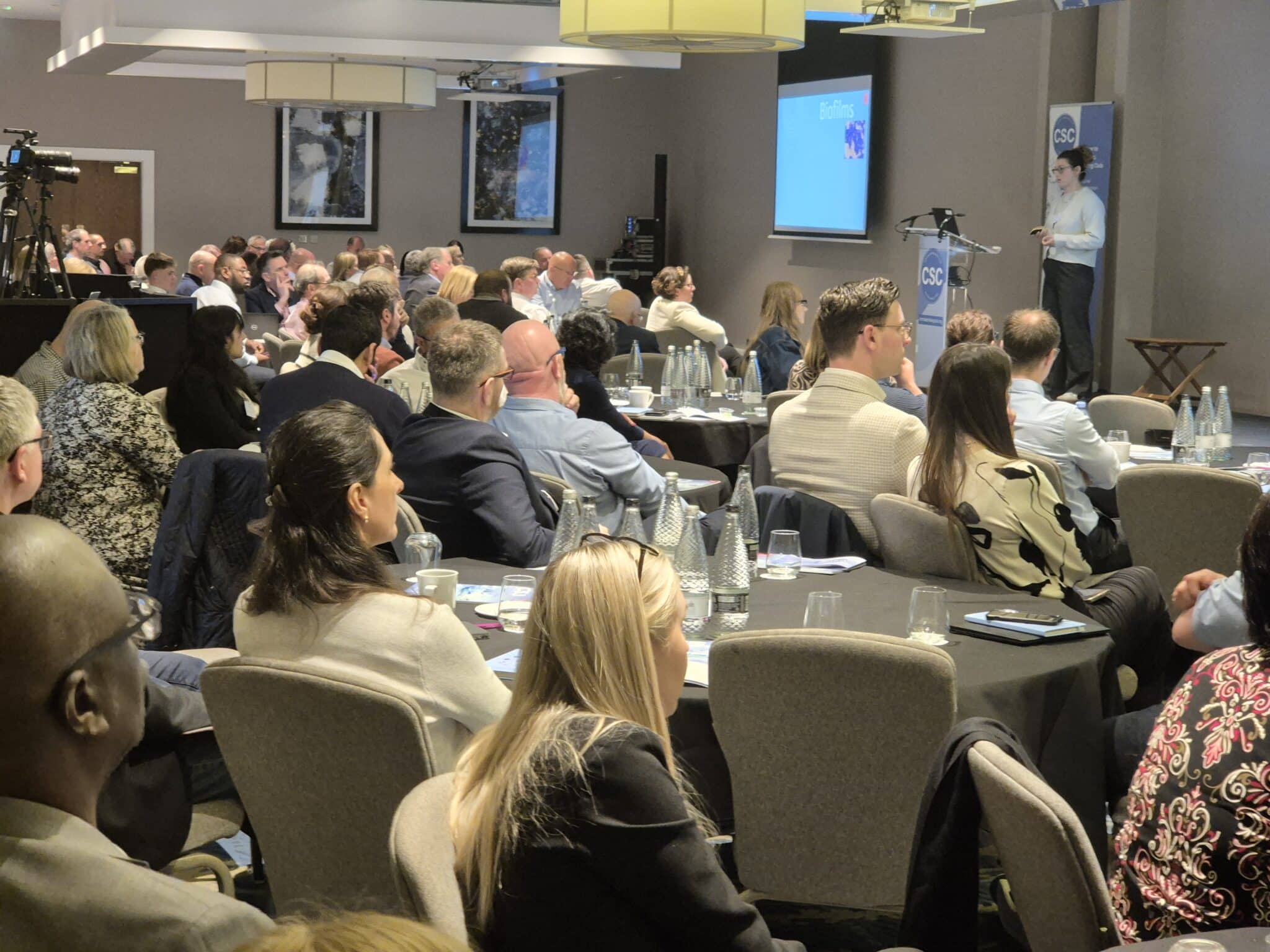
This condensed newsletter brings together the main themes from recent sessions on decontamination, endoscopy, reusable medical devices, sustainability and patient safety. Each item is written as a short introduction so readers can follow links to the full article for more detail.
The Kelsey Lecture: communicating risk and uncertainty in decontamination

Andrew Smith used the Kelsey Lecture to explore how decontamination professionals can communicate risk, probability and uncertainty more clearly. Drawing on sterilisation science, public health incidents and organisational learning, the lecture showed why vague terms such as “high risk”, “low risk” or “common” can be misleading unless supported by numbers, confidence levels and plain language. The key message was that clearer risk communication can help clinical teams, leaders and boards make safer decisions while recognising the high standards and patient safety value of decontamination services.
READ MORE HERE
Surgical implants: Wales takes a transparent, risk-based approach

John Prendergast shared how NHS Wales has issued a strong recommendation to move towards pre-packed, sterile, single-use small orthopaedic implants wherever practicable. The approach follows detailed review of the risks associated with repeatedly reprocessing unused screws, plates and similar items, including concerns about contamination, cleaning assurance, traceability, surface damage and regulatory liability. The position does not impose a blanket mandate, but it makes clear that any decision to continue using reusable or reprocessed implants must be formally risk assessed, justified and signed off at executive board level.
Phaco handpieces: connect, orientate and dry

Jim Tinsdeall gave a session on phacoemulsification handpieces reinforcing the importance of cleaning internal channels as well as external surfaces. Delegates reviewed how missed flushing, unconnected lumens, poor orientation and inadequate drying can undermine sterility assurance. The key message was practical: connect lumen devices to automated wash processes where possible, position them to support drainage, and treat drying as a critical safety step rather than a finishing detail.
Patient safety and net zero: decontamination must lead the conversation

Jincy Jerry shared research helping sustainability to be framed not as a reason to weaken standards, but as an opportunity for decontamination teams to lead safer, smarter practice. The session highlighted safe wins including better machine loading, tray rationalisation, improved waste segregation, appropriate reusable systems and stronger data. The central message was that preventing infection is one of the most powerful environmental contributions healthcare can make.
The evolution of endoscope pre-cleaning
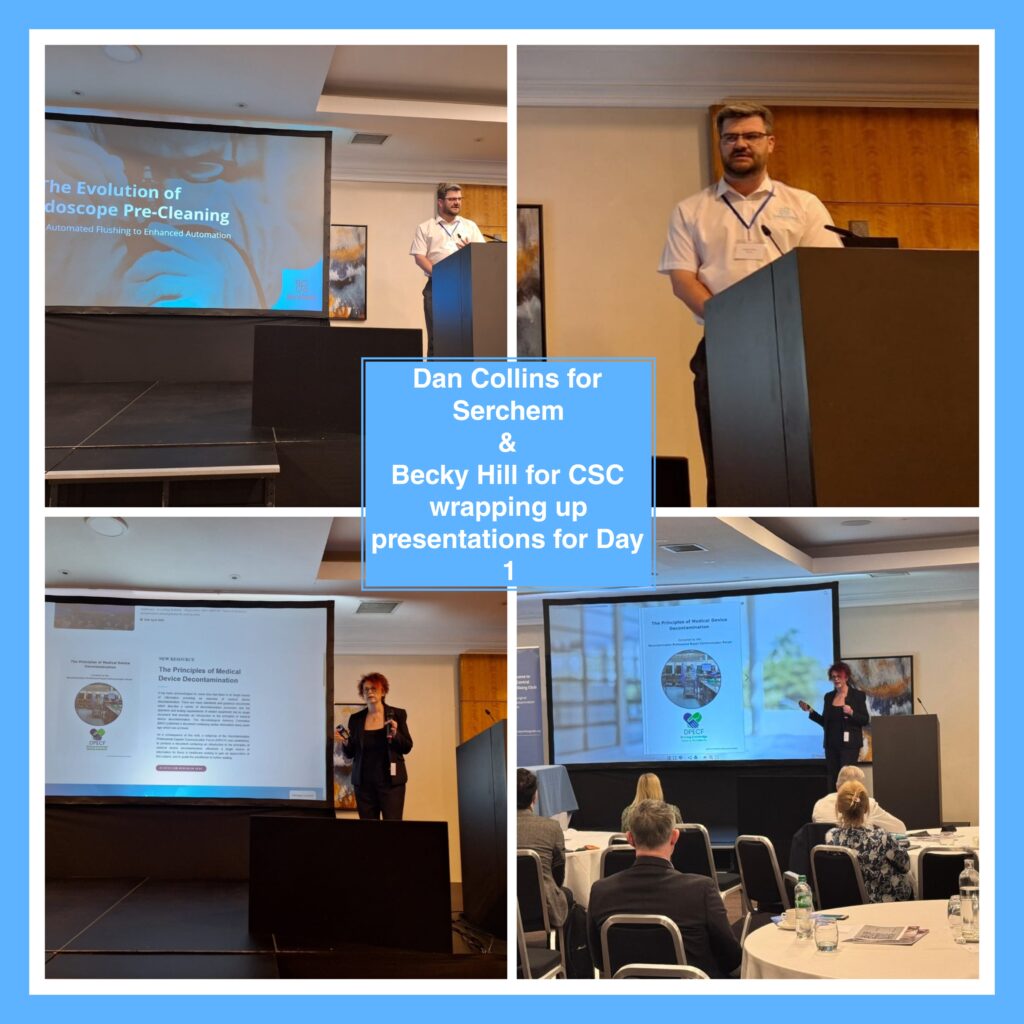
Dan Collins introduced the Gandy AEPS 10G automated endoscope pre-cleaning system, designed to automate leak testing, detergent dosing, flushing, rinsing and purging while improving traceability. The presentation focused on how automation can help busy endoscopy teams standardise practice, reduce manual handling, support audit readiness and cut consumable waste through reusable tubing and more sustainable chemistry packaging.
Decontamination is everyone’s business

Helen Griffith challenged endoscopy teams to stop seeing decontamination as something that happens elsewhere. She argued that clinicians must understand enough about reprocessing to be assured that every scope is safe for the patient in front of them. Her session covered training, governance, incident learning, off-label scope use and the need for decontamination to be visible in endoscopy decision-making.
Sustainability in medical devices: practical progress over perfect data

Michelle Sullivan, speaking as Chair of the ABHI Sustainability Group, explored how the medical technology sector can move towards net zero without losing sight of patient safety. Her session highlighted the difficult trade-offs between single-use and reusable products, the challenge of understanding scope three emissions and the danger of making decisions based on assumptions rather than evidence. The key message was pragmatic: do not wait for perfect data before acting. Reducing waste, reviewing unused stock, improving procurement and collaborating across the system can all help healthcare become safer, greener and more sustainable.
Water-safe care: rethinking sinks and wastewater
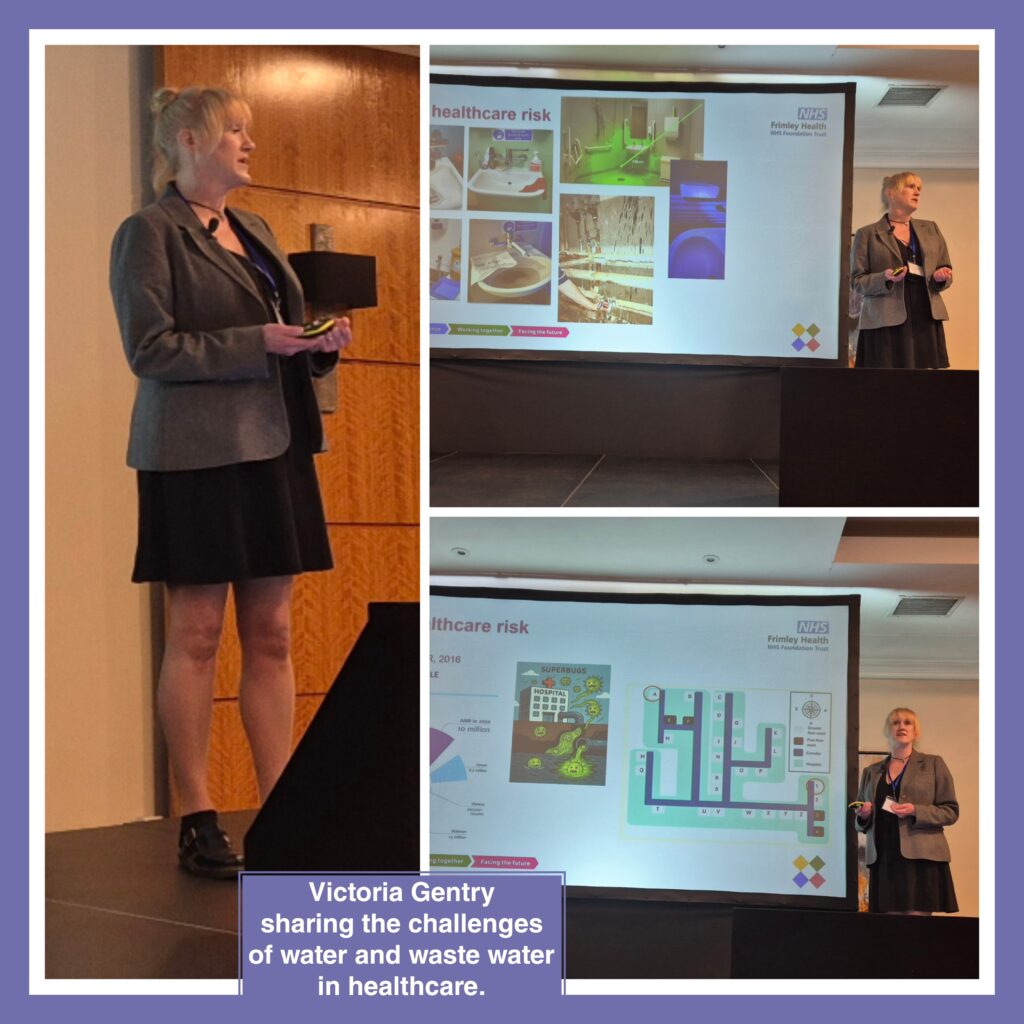
Victoria Gentry shared Frimley Health’s work to reduce infection risk linked to water and wastewater systems. Following a CPE outbreak, the organisation examined sinks, pipework, splash zones and clinical workflows, then introduced water-safe care principles. Sink rationalisation, better design, staff education and surveillance helped reduce risk in high-priority areas, including haematology-oncology and intensive care.
CSC launches free digital decontamination resource
The Central Sterilising Club has launched a free digital manual bringing together key principles and guidance on reusable medical device decontamination. Designed as a living document, the resource can be read online, navigated by chapter and updated over time as practice, evidence and technology evolve.
Endoscope design: where flow meets pressure

Ronald Wassenburg led a technical session exploring why the internal design of flexible endoscopes remains a major challenge for safe reprocessing. Complex channel layouts, variable diameters, connectors, valves and distal-end mechanisms can make it difficult to prove that cleaning and disinfecting fluids reach every surface. The speaker called for better design, stronger understanding of flow and pressure, and continued focus on manual pre-cleaning for high-risk devices such as duodenoscopes.
Ultrasound probe decontamination: the final frontier

Ursula Morby highlighted ultrasound probes as an underestimated infection prevention risk, especially as point-of-care ultrasound expands across wards and departments. The session emphasised the need for automated high-level disinfection where required, reliable traceability, clear training, effective use of probe covers and early decontamination input when new ultrasound technology is introduced.
Psychological safety in healthcare: It’s possible to embrace imperfection and still be a great team!

Mat Moyo explored psychological safety as a practical patient safety tool. Teams with better outcomes may not make fewer mistakes; they may be more willing to report and learn from them. His TRUST approach encouraged teams to tell the truth, review mistakes kindly, uncover solutions, summon help and try again. For healthcare teams, openness is not optional: it is how risks become visible before they harm patients.
Wax on, wash right: surgical instrument cleaning

Sulisti Holmes used a memorable Karate Kid theme to underline a simple point: if an instrument is not clean, it cannot be safely sterilised. A Scottish study comparing cleaning approaches found strong performance when washer-disinfectors were properly specified, validated, maintained and loaded. The session also reinforced the importance of preventing soil from drying and investing in staff competency.
Robotics in sterile services: cleaner, faster workflows
Lee Clark discussed the growing impact of robotic-assisted surgery on sterile services departments. As robotic instruments become more common, reprocessing systems must remain safe while supporting faster turnaround and better workflow. A dedicated basket approach may help reduce handling, avoid long waits for bespoke racks, improve washer capacity and support validated cleaning and sterilisation processes.
The hazards facing decontamination leads
Rob Warburton outlined the breadth of the decontamination lead role, from strategy and policy to audit, staff competence, traceability and equipment governance. His session warned that decontamination risks are not confined to sterile services, but exist across endoscopy, ultrasound, dental, laboratories, local clinical areas and other specialist settings. Strong assurance depends on knowing where decontamination happens and proving it is safe.
Great debate: HTMs or international standards?

The conference debate, moderated by Andrew Smith, with the debaters Richard Bancroft and Brian Kirk, asked whether the UK should abandon Health Technical Memoranda in favour of European and International Standards. Arguments for the motion focused on currency, consistency and the regular review of standards. Arguments against stressed the need for UK-specific interpretation and local control. After discussion, support for the motion grew and the house voted in favour, while the debate highlighted the continuing importance of how guidance is developed, maintained and applied.