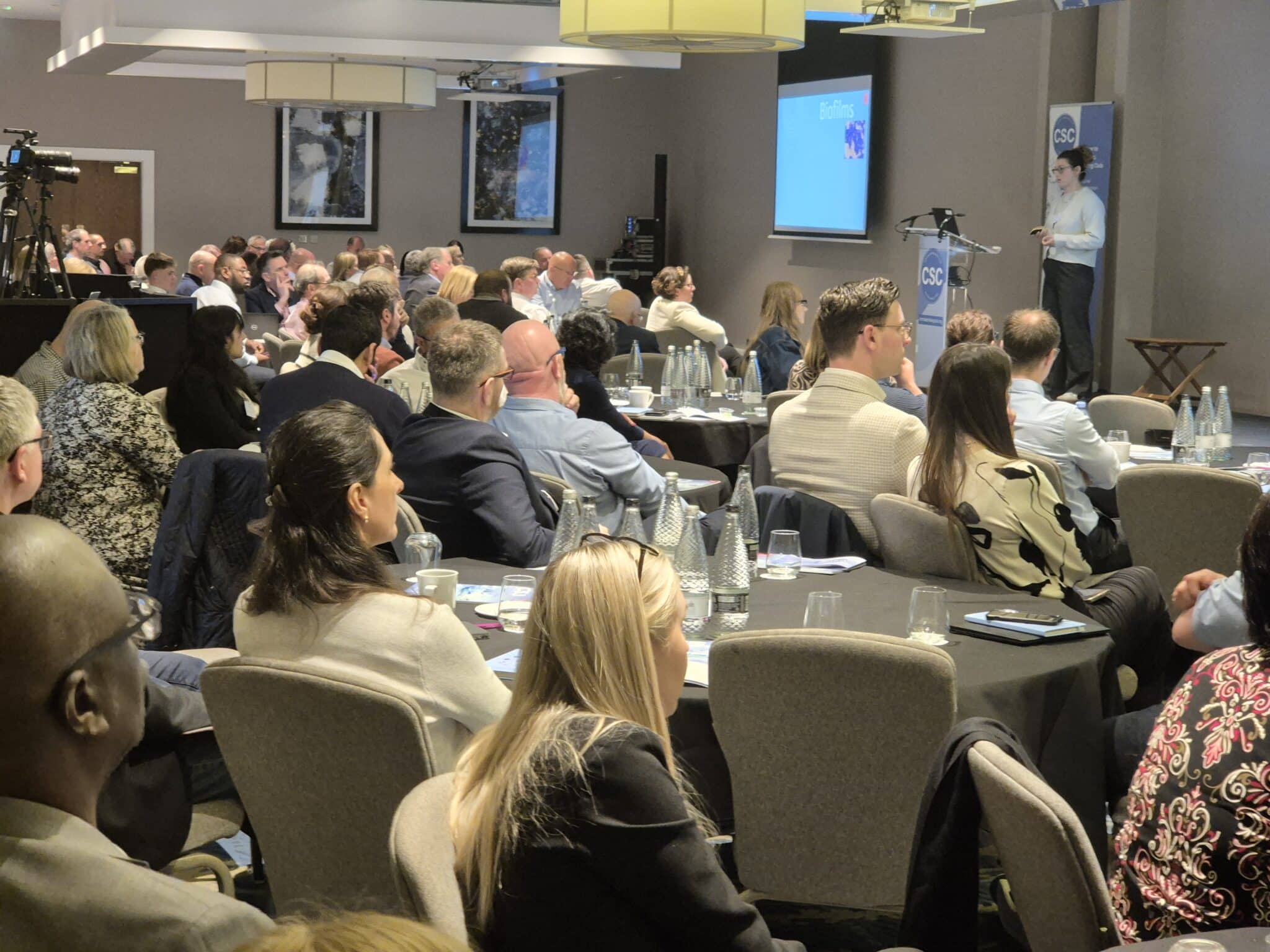
A conference talk explored why healthcare sustainability is rarely straightforward — and why collaboration, pragmatism and patient safety must guide the shift from single-use products to more circular models.
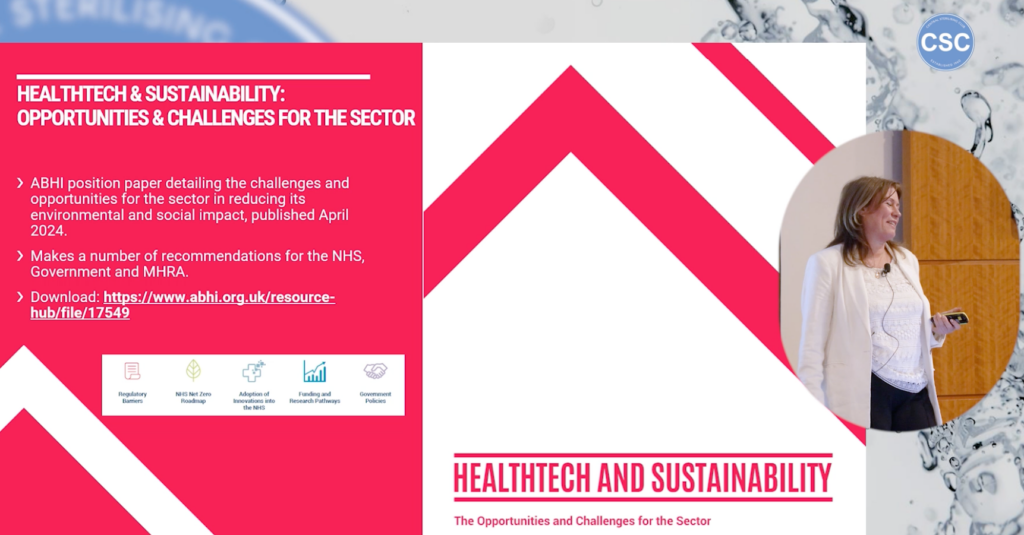
The medical devices sector is facing one of its most complex sustainability challenges yet: how to reduce emissions and waste while maintaining the highest standards of patient safety. In a candid and practical talk, Michelle spoke in her capacity as Chair of the Association of British HealthTech Industries Sustainability Group, representing the collective position of the group. She reflected on more than two decades in the industry, describing the move from reusable instruments to single-use products after concerns over infection risk — and the current pressure to move back towards reusables in response to net zero targets.
Her central message was clear: there are no easy answers. Sustainability in healthcare is, as she put it, “the world’s biggest onion” — every layer reveals another consequence, another trade-off and another reason why simple assumptions can quickly fall apart.
From single use to reusables — and back again?
Michelle recalled starting work in medical devices in 2000, at a time when hospitals were urgently converting many reusable instruments to single-use alternatives. The driver then was patient safety, particularly concerns around sterilisation and infection control following the BSE crisis.
Today, the conversation has shifted. Hospitals and suppliers are now being asked how they can reduce carbon emissions, minimise waste and support the NHS’s net zero ambitions. That often means reconsidering reusable instruments, circular economy models and new approaches to procurement.
But the speaker warned against assuming that reusable is always better, or that single use is always worse. In healthcare, the safest and most sustainable option depends on the product, the procedure, the cleaning infrastructure, the waste stream, transport, sterilisation capacity and clinical risk.
Understanding net zero without the jargon
A recurring theme was the need to make sustainability language more accessible. Terms such as carbon footprint, scope one, scope two and scope three can feel like “gobbledegook”, particularly for people whose day-to-day work is focused on clinical care, manufacturing, logistics or compliance.
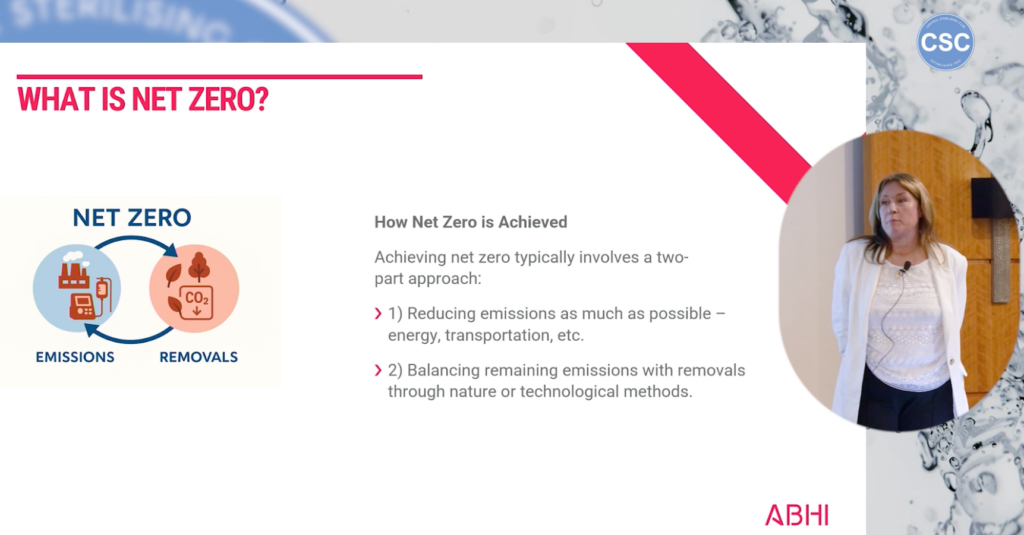
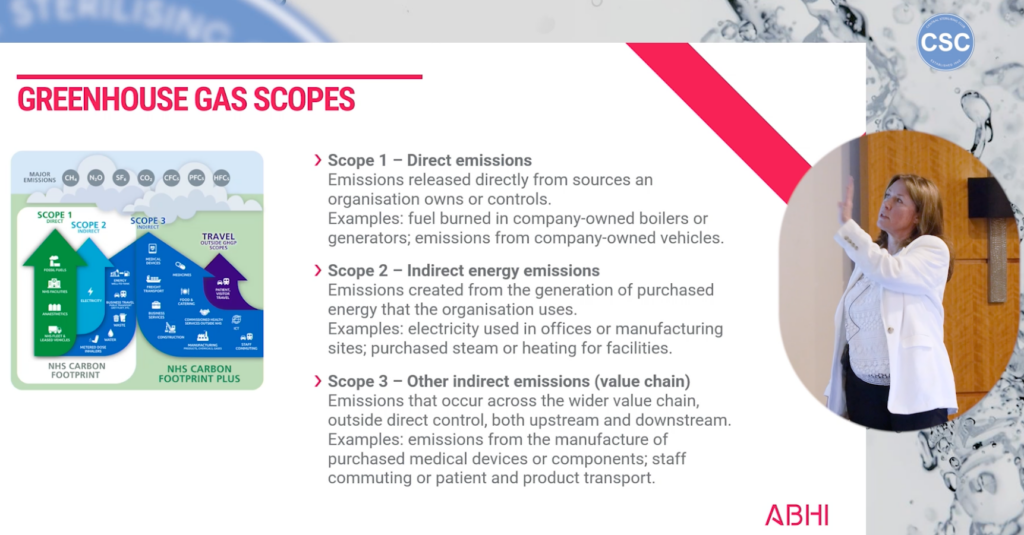
At its simplest, Michelle explained, net zero is about reducing emissions as far as possible and then balancing what remains through carbon removal, whether through natural systems or technological solutions. Scope one and two emissions are usually more directly controlled by organisations, such as energy used on-site or purchased electricity. Scope three emissions, however, sit across the wider value chain — from raw materials and manufacturing to distribution, use and disposal.
For medical device companies, scope three is where much of the challenge lies. It requires looking far beyond a company’s own operations and working with suppliers, customers, logistics partners and healthcare providers to understand where the biggest impacts occur.
Practical action beats perfect measurement
While carbon reporting and life cycle assessments have an important role, the talk questioned whether excessive precision can sometimes slow progress. Michelle shared examples of life cycle assessments taking significant time and producing different results for similar products, making it difficult for organisations to act with confidence.
Her advice was to be pragmatic. Rather than waiting for perfect data, healthcare teams and suppliers can often identify obvious hotspots: unnecessary overnight deliveries, products flown between sites, expired stock, unused items in surgical trays, equipment left on when not in use, or products being disposed of through the wrong waste stream.
Small operational changes can make a meaningful difference. Reviewing trays to remove items that are consistently unused, switching off equipment when appropriate, improving stock management and avoiding unnecessary urgent transport are all examples of actions that can reduce waste and emissions without compromising care.
Patient safety must remain the priority
The speaker repeatedly emphasised that healthcare is not a normal industry. Decisions about products, waste and carbon cannot be separated from patient outcomes. A single-use device may have an apparent environmental cost, but if it shortens surgery, prevents infection or reduces complications, the wider system impact may be lower than expected.
Similarly, moving to reusable instruments requires sufficient sterilisation capacity, reliable processes, water availability, staff training and clear workflows. Without these, sustainability initiatives may create unintended consequences. Michelle advocated for a triage approach: identify which products can safely become reusable, which might be better suited to recycling or circular models, and which should remain single use because of clinical risk. The goal is not to apply one answer everywhere, but to choose the best route for each product and setting.
A system-wide challenge
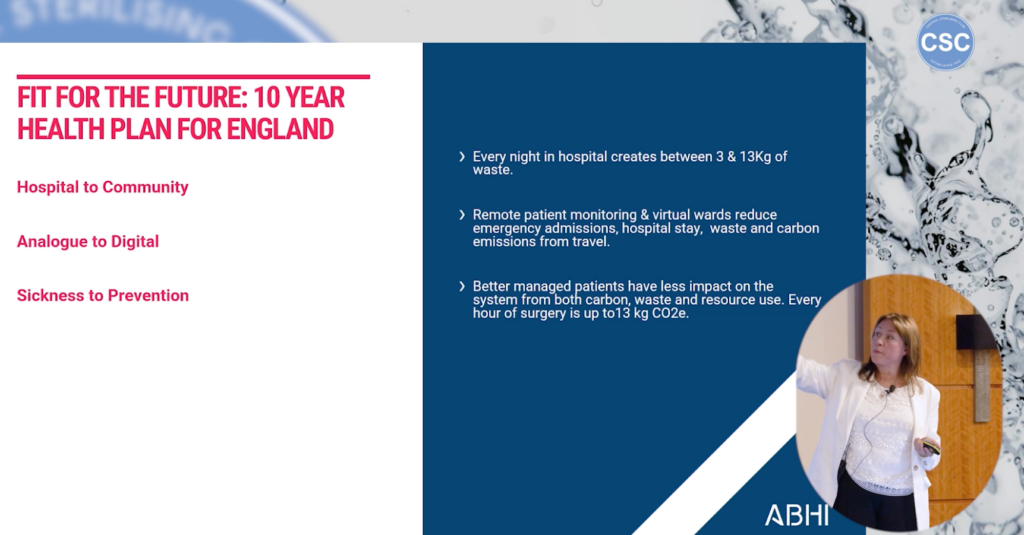
The NHS’s commitment to net zero has already reshaped expectations for suppliers. Carbon reduction plans, emissions reporting, social value requirements and sustainability ratings are becoming part of procurement conversations. By 2027, companies are expected to show more comprehensive progress across all emissions scopes.
However, the talk highlighted ongoing frustration around inconsistency. Different organisations may ask for different dates, standards, evidence and reporting formats. Innovation can also be adopted unevenly, with some sustainable alternatives facing regulatory, waste-stream or trading standards challenges even when they reduce reliance on fossil-based materials.
For Michelle, the answer lies in alignment across the whole system: suppliers, hospitals, clinicians, procurement teams, waste handlers, regulators, government and academia all need to work together to identify what is safe, realistic and scalable.
Key takeaways
- Sustainability decisions in healthcare are rarely intuitive. The right answer depends on clinical safety, logistics, waste routes, sterilisation, water, energy and product design.
- Scope three emissions are the hardest to tackle. They sit across the whole value chain and require collaboration beyond any single organisation.
- Practical action matters. Reducing unused stock, unnecessary transport, expired products and avoidable energy use can create immediate benefits.
- Reusable is not automatically better. Products should be assessed case by case, with patient safety as the deciding factor.
- Consistency is needed. The sector needs clearer expectations, aligned standards and realistic pathways for sustainable innovation.
Looking ahead
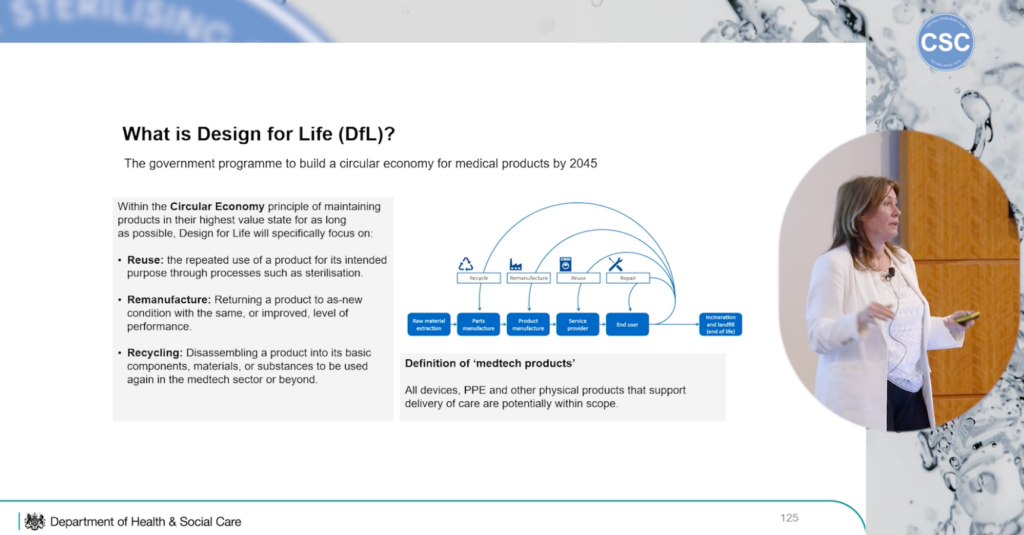
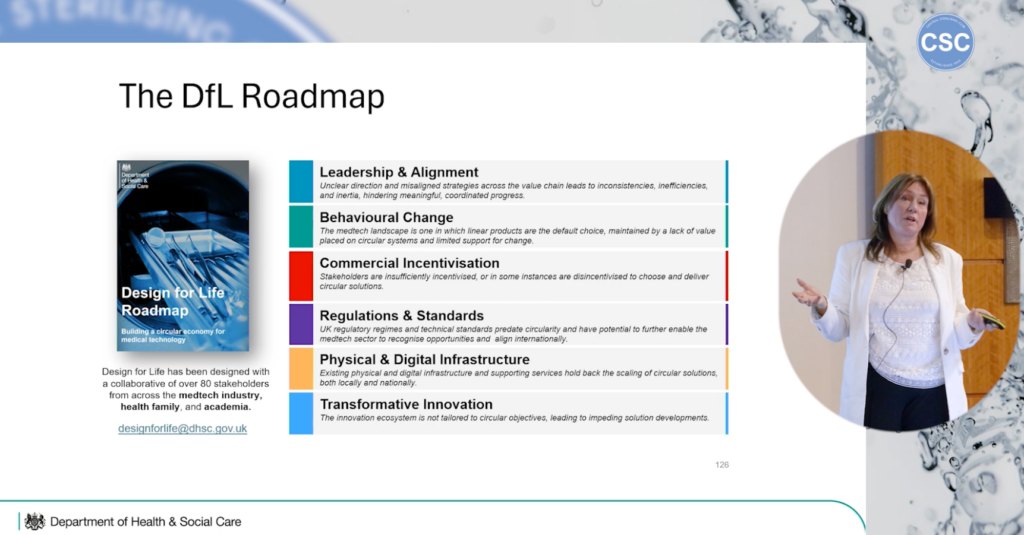
The next five years are likely to bring significant change. Renewable energy, electrification, circular design, digital healthcare and more mature waste systems are all expected to influence how medical devices are made, used and recovered.
The message from the talk was ultimately optimistic but grounded: progress will not come from perfect answers, but from asking better questions, sharing evidence and working together. In sustainability, as Michelle reminded the audience, “there is no such thing as a stupid question”.