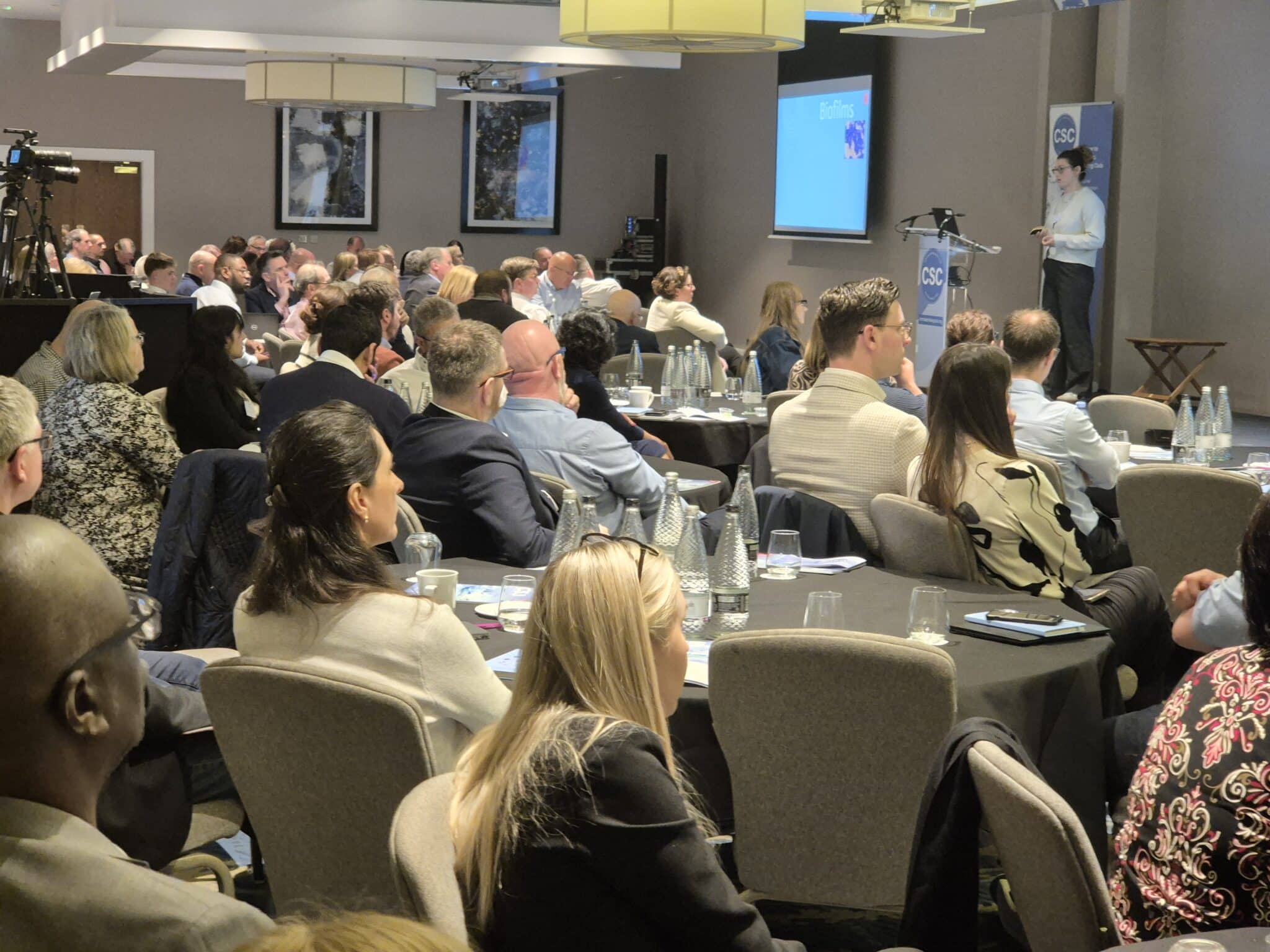
Conference delegates heard a lively and good-humoured debate on whether Health Technical Memoranda should give way to European and international standards.
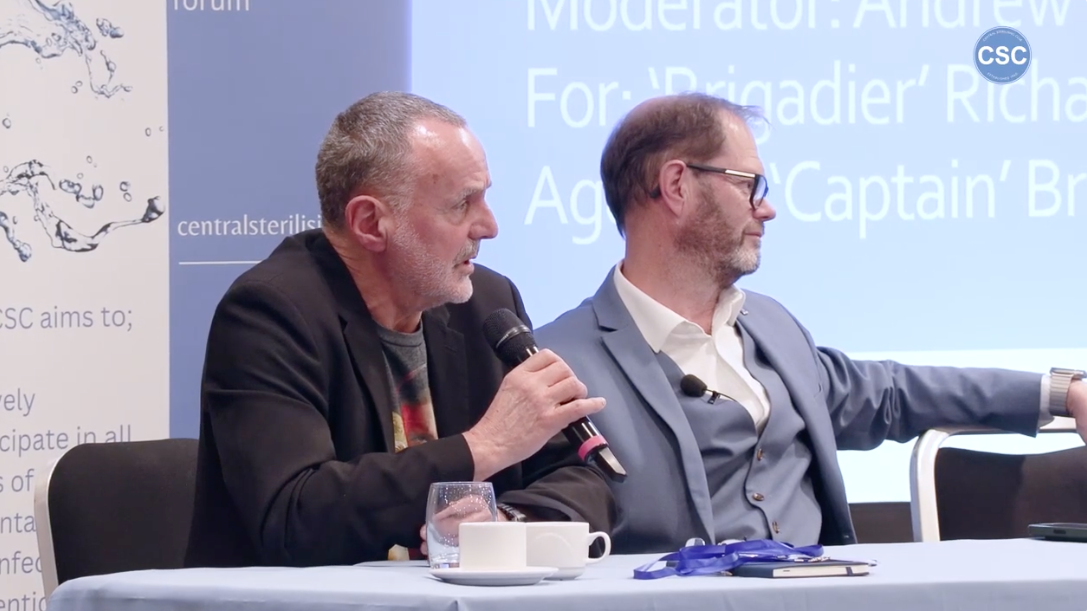
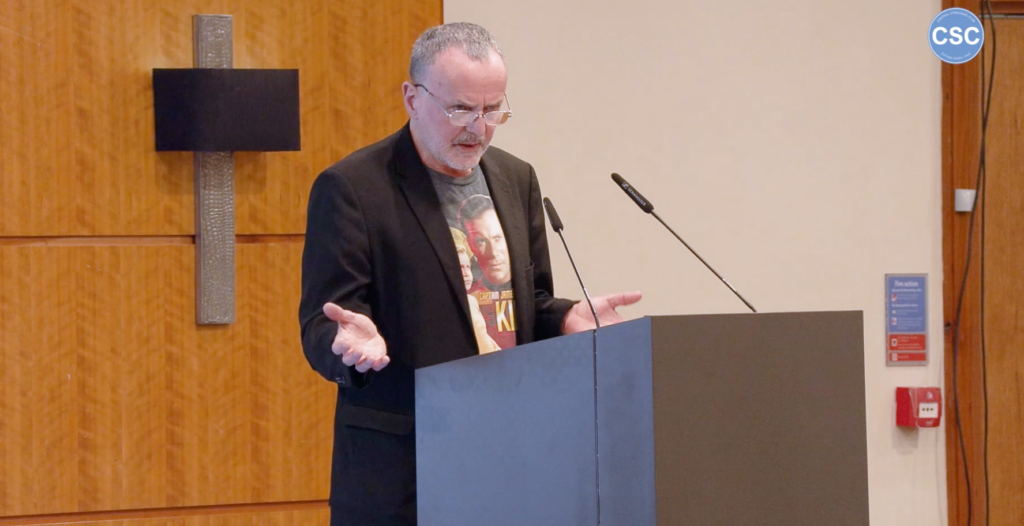
One of the highlights of the conference was the “great debate”, where delegates considered the motion: “This house believes the UK should abandon HTMs in favour of international standards.” Chaired with humour and a light boxing theme, the session brought together two experienced voices from the decontamination and standards community: Brigadier Richard Bancroft speaking for the motion, and Captain Brian Kirk opposing it.
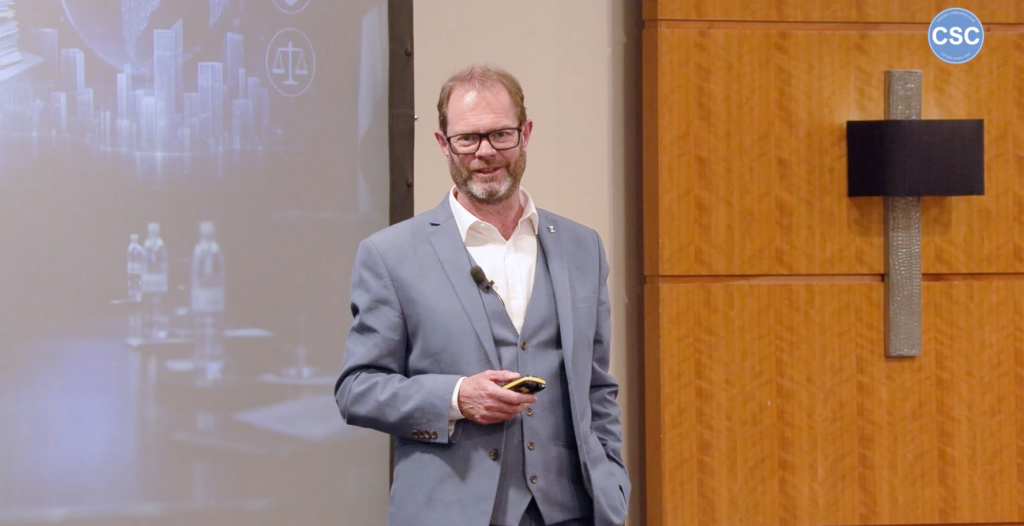
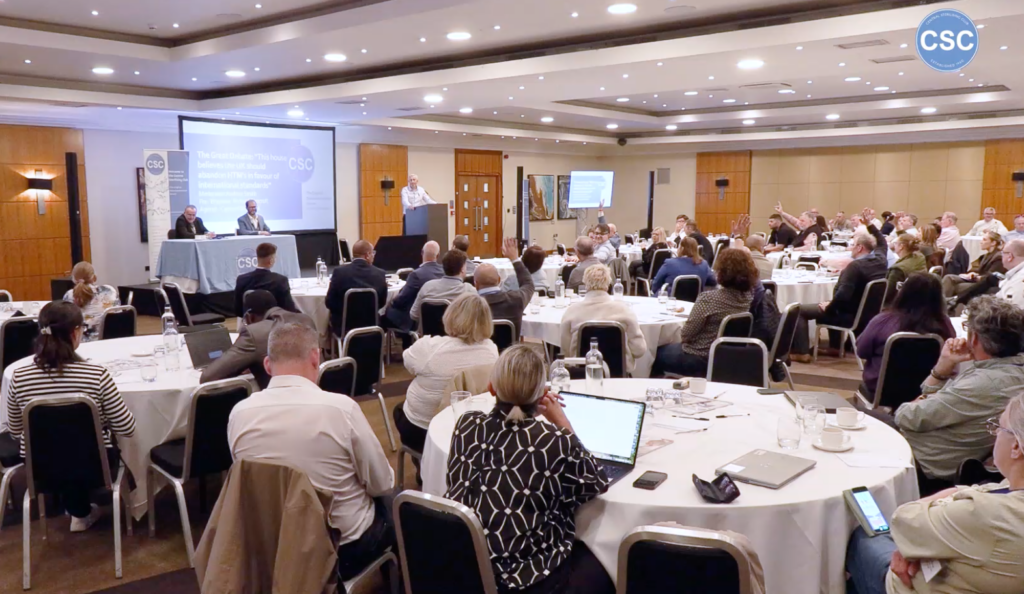
Before the arguments began, the chair, Andrew Smith, asked for an initial show of hands. Only a scattering of delegates supported the motion at the outset, setting the stage for a debate in which both speakers would need to persuade the room.
The case for international standards
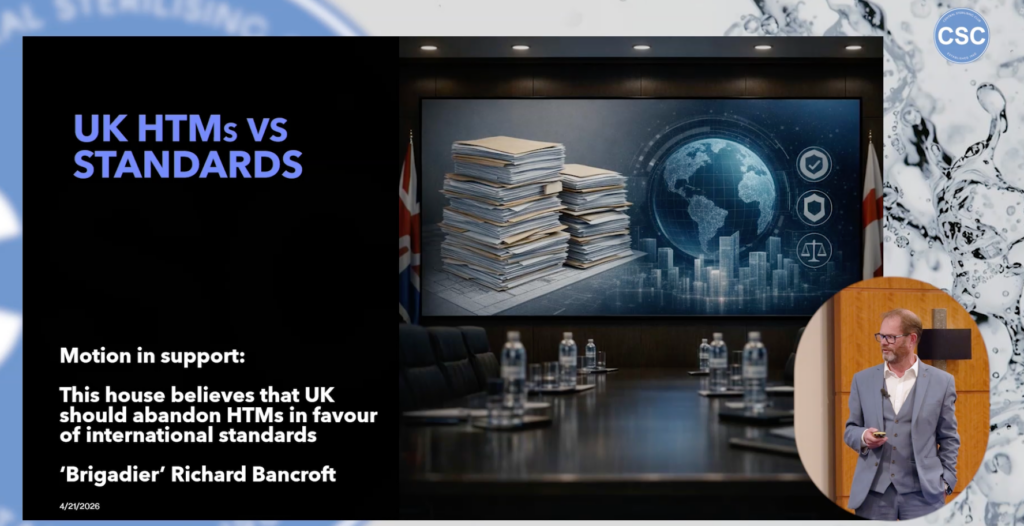
Opening for the motion, Brigadier Bancroft argued that the UK had played a pioneering role in shaping many of the standards now used internationally. He traced the influence of earlier UK guidance and British standards, including the development of standards for sterilizers, moist heat sterilization and washer-disinfectors.
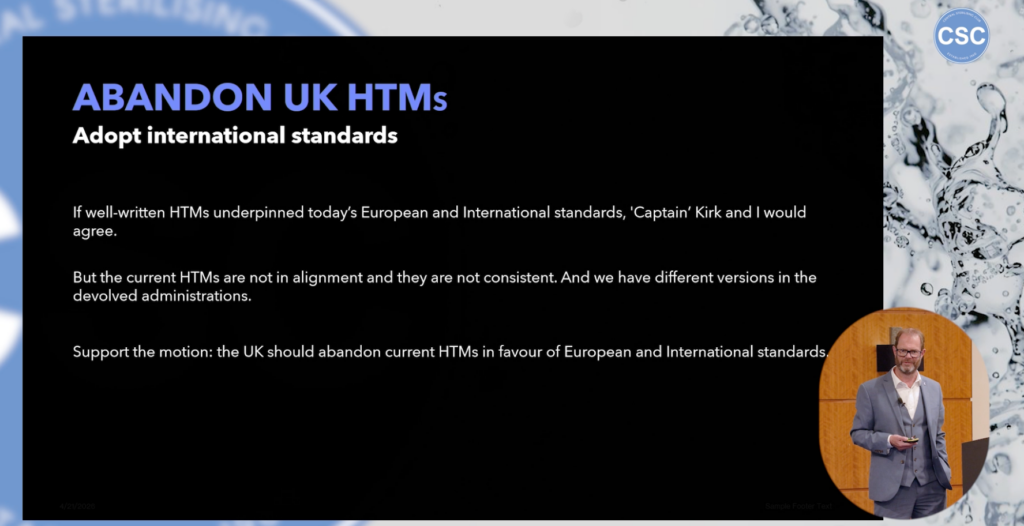
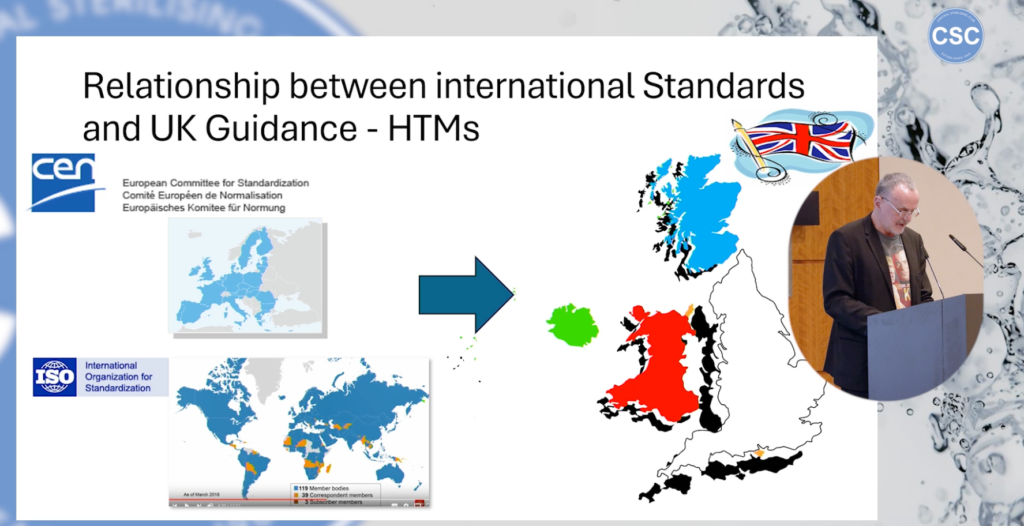
His central point was that UK guidance had once helped lead the world, but that the current suite of HTMs no longer provides the clarity, consistency or currency required. He highlighted the shift through the CFPP era, the return to HTM naming, and the fragmentation of guidance across England, Scotland, Wales and Northern Ireland.
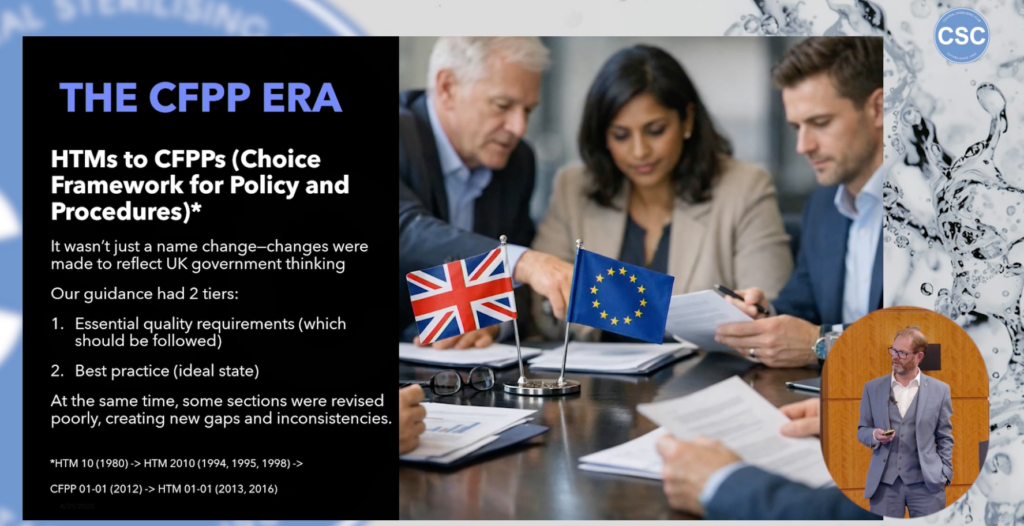
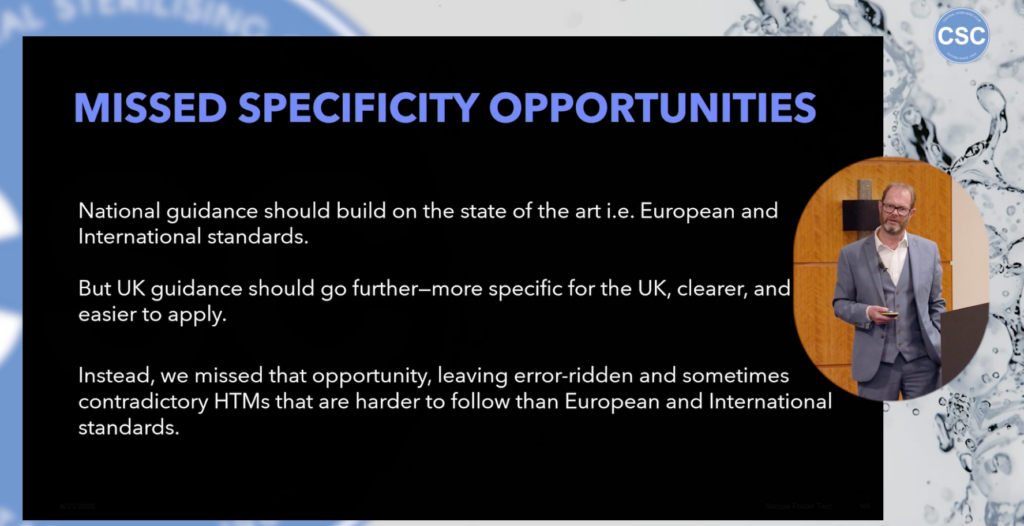
For Richard, this fragmentation has created unnecessary complexity for services trying to demonstrate compliance with both UK guidance and European or International Standards. He argued that contradictions and outdated requirements can make it harder for quality management systems to operate confidently, particularly where organisations are expected to align with standards such as ISO 13485.
He also noted that International Standards are regularly reviewed and updated, while some HTMs have not kept pace. In his view, the UK should now rely on the stronger, more current body of European and International Standards rather than maintain guidance that is inconsistent, duplicated or out of step with modern practice.
The case for retaining HTMs
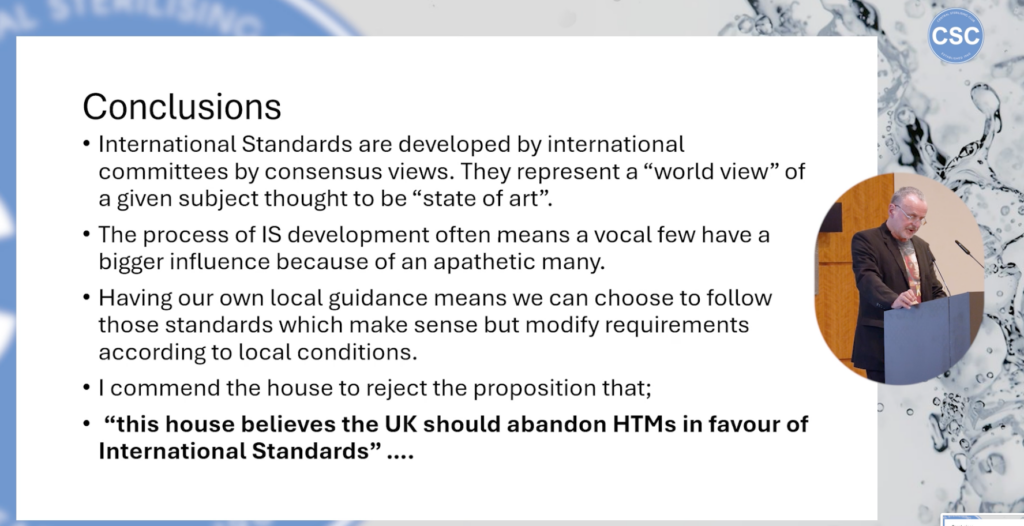
Responding against the motion, Captain Kirk argued that HTMs remain essential because they allow international requirements to be interpreted and applied in a UK healthcare context. He accepted that the current HTM development process has weaknesses, but maintained that local guidance is still needed to protect UK interests and reflect local policy, legislation, healthcare structures and operational needs.
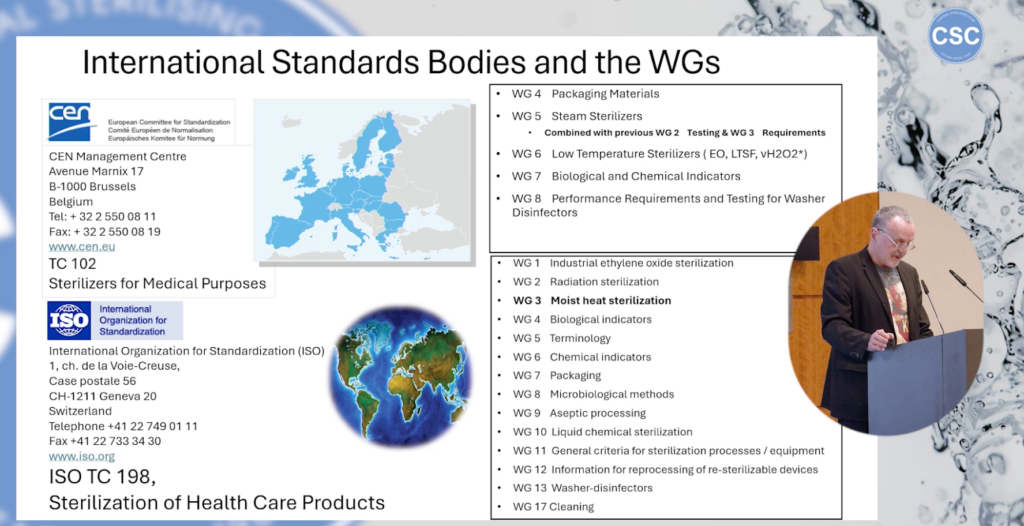
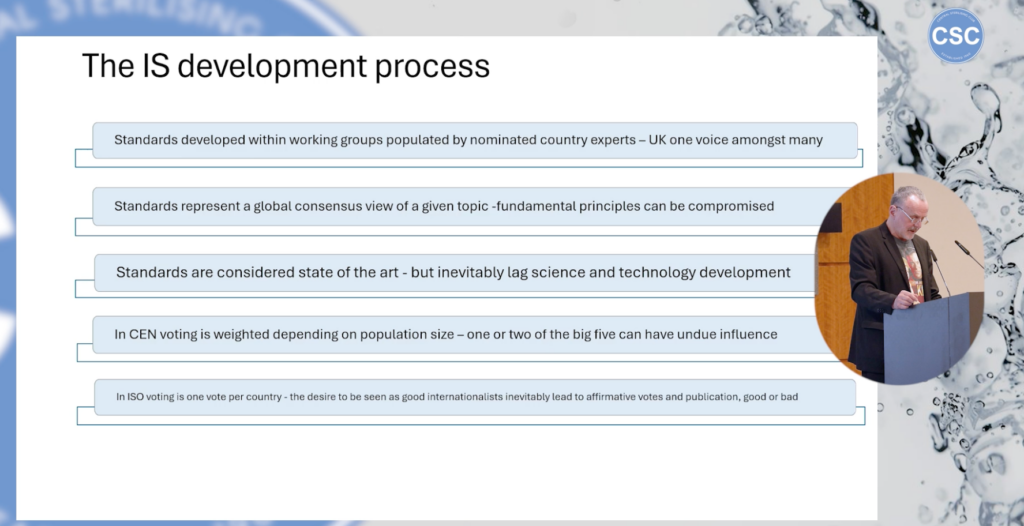
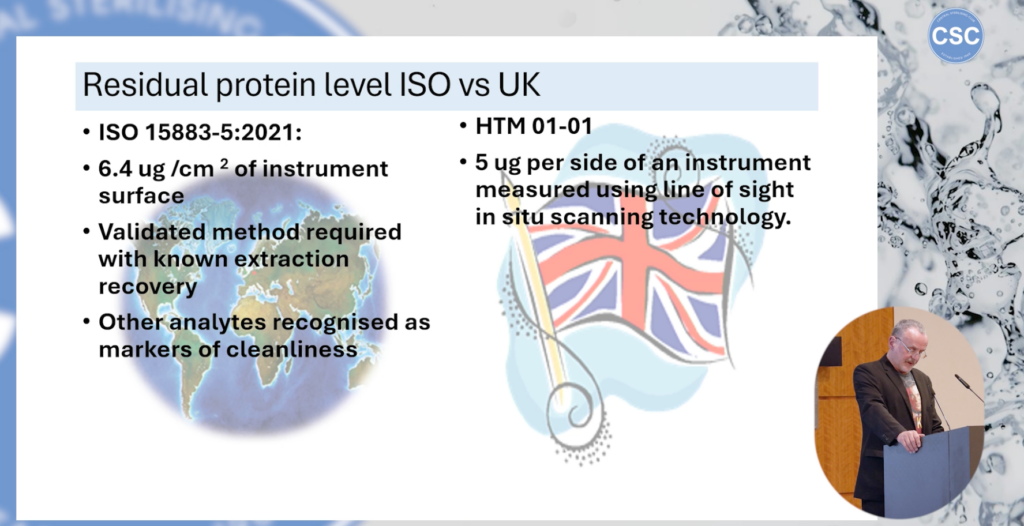
Brian explained that International Standards are developed through consensus among participating countries. While this process has strengths, he argued that it can also require compromise, leaving some requirements generic or less suitable for UK practice. He cited examples including sterilization time and temperature requirements, air detectors in porous load steam sterilizers, protein residue limits, and the selection of Bowie-Dick test standards.
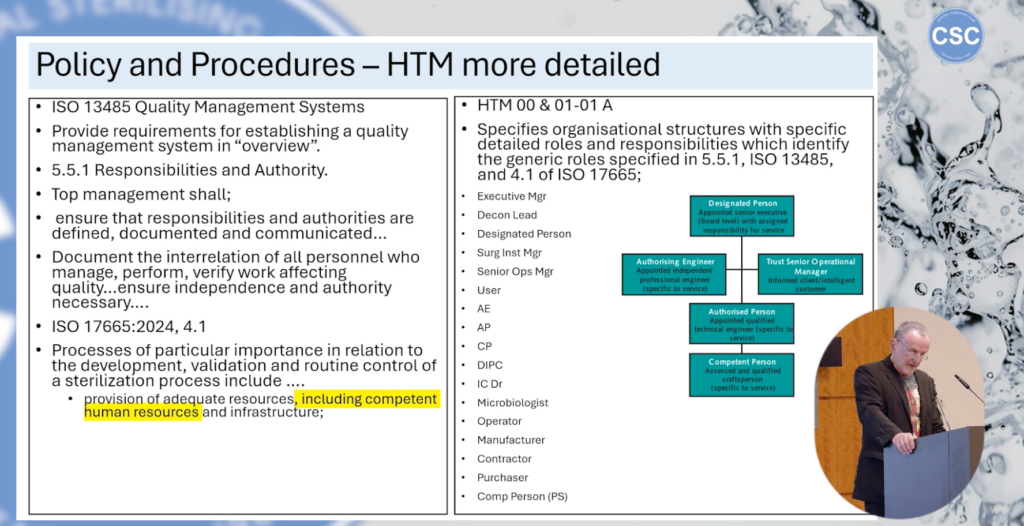
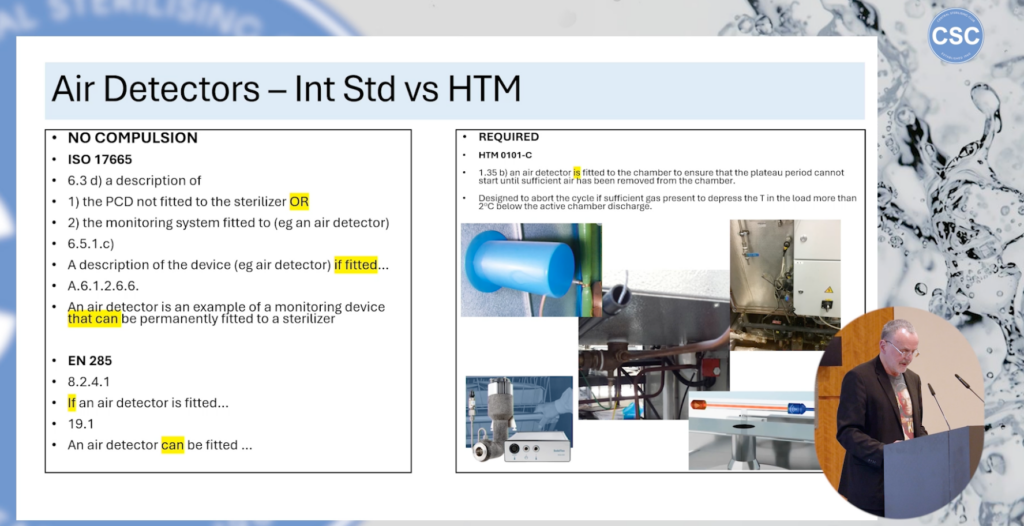
In his view, HTMs provide a mechanism for the UK to make clear decisions where International Standards offer options, lack specificity, or do not fully address local risk. Rather than abandoning HTMs, he argued for retaining local guidance while improving how it is produced, reviewed and maintained.
Questions from the floor
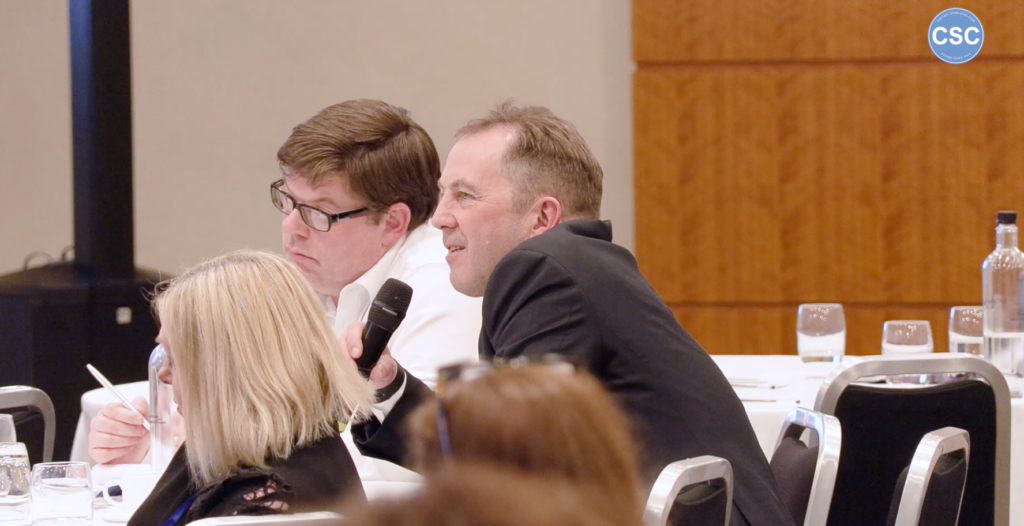
The audience discussion focused on several practical issues. One delegate asked how the UK can keep pace with changing science and emerging risks when some HTMs have not been updated for many years. Richard argued that this reinforced the case for relying on more recently revised International Standards, while Brian agreed the HTM revision process is lacking but said this did not remove the need for local guidance.
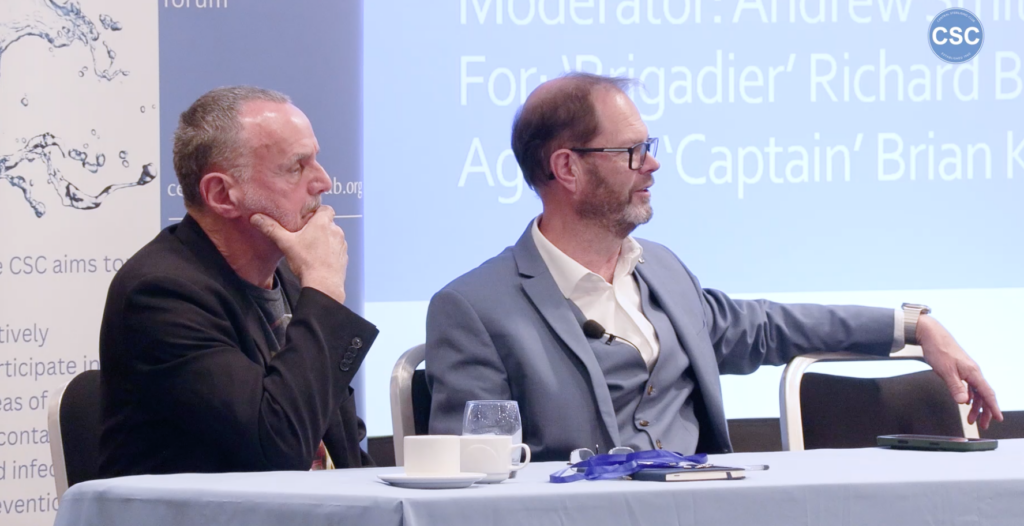
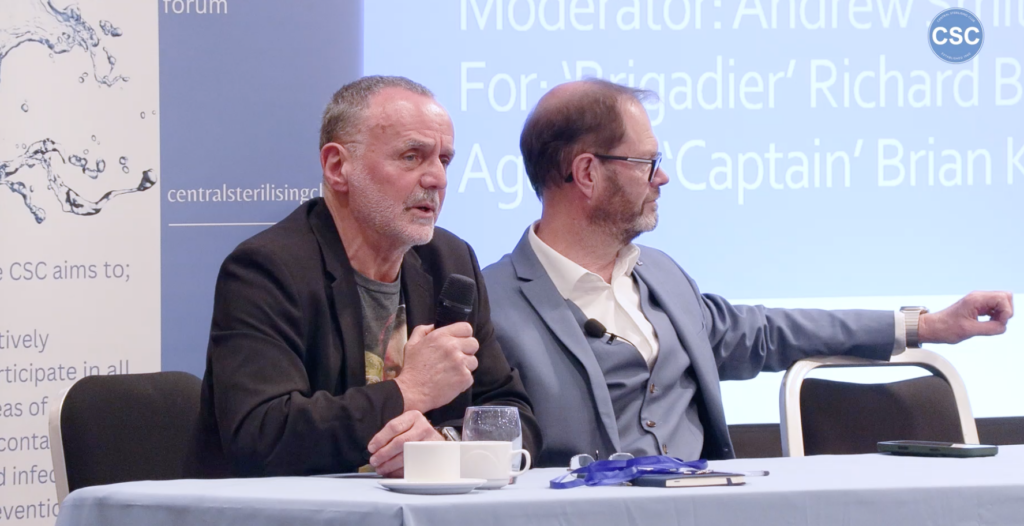
Another question raised the cost of accessing ISO standards for NHS organisations. Richard suggested that access to standards should be treated as an organisational requirement, noting that the cost is small compared with the value of robust, evidence-based systems. The discussion also touched on the relative openness of standards development, with contributors noting that involvement in ISO and British Standards committees may provide clearer routes for professional input than some HTM processes.
Closing arguments and final vote
In his closing remarks, Richard returned to the theme of governance and currency. He argued that the lack of transparent, consensus-based development and the long intervals between HTM revisions made the current system inadequate. He urged delegates to support the motion and move towards European and International standards as the primary reference point.
Brian’s final response was more nuanced. He acknowledged that many International Standards are valuable and that some HTMs need improvement, but argued that both are needed: International Standards to provide a broad technical foundation, and HTMs to apply those requirements appropriately within UK healthcare. His conclusion was that the proposition should be rejected because abandoning HTMs altogether would remove an important tool for local choice and control.
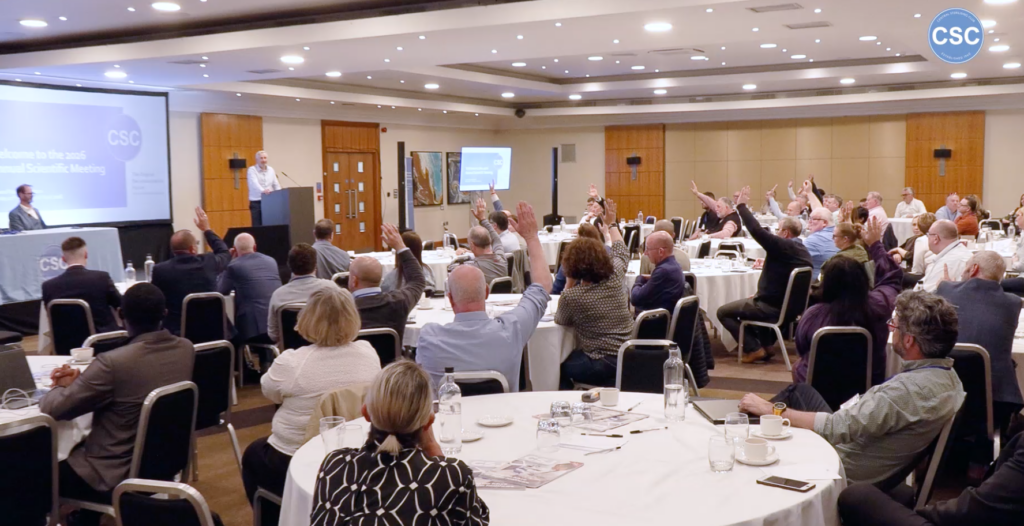
After a final show of hands, support for the motion had clearly grown from the opening vote. The chair declared that the motion had carried: the house believed the UK should abandon HTMs in favour of International Standards.
The debate ended as it had begun: with humour, strong technical argument and a reminder that the future of guidance in decontamination depends not only on what standards say, but on how they are developed, maintained and applied in practice.