Key lessons on responsibility, assurance and patient safety in healthcare decontamination
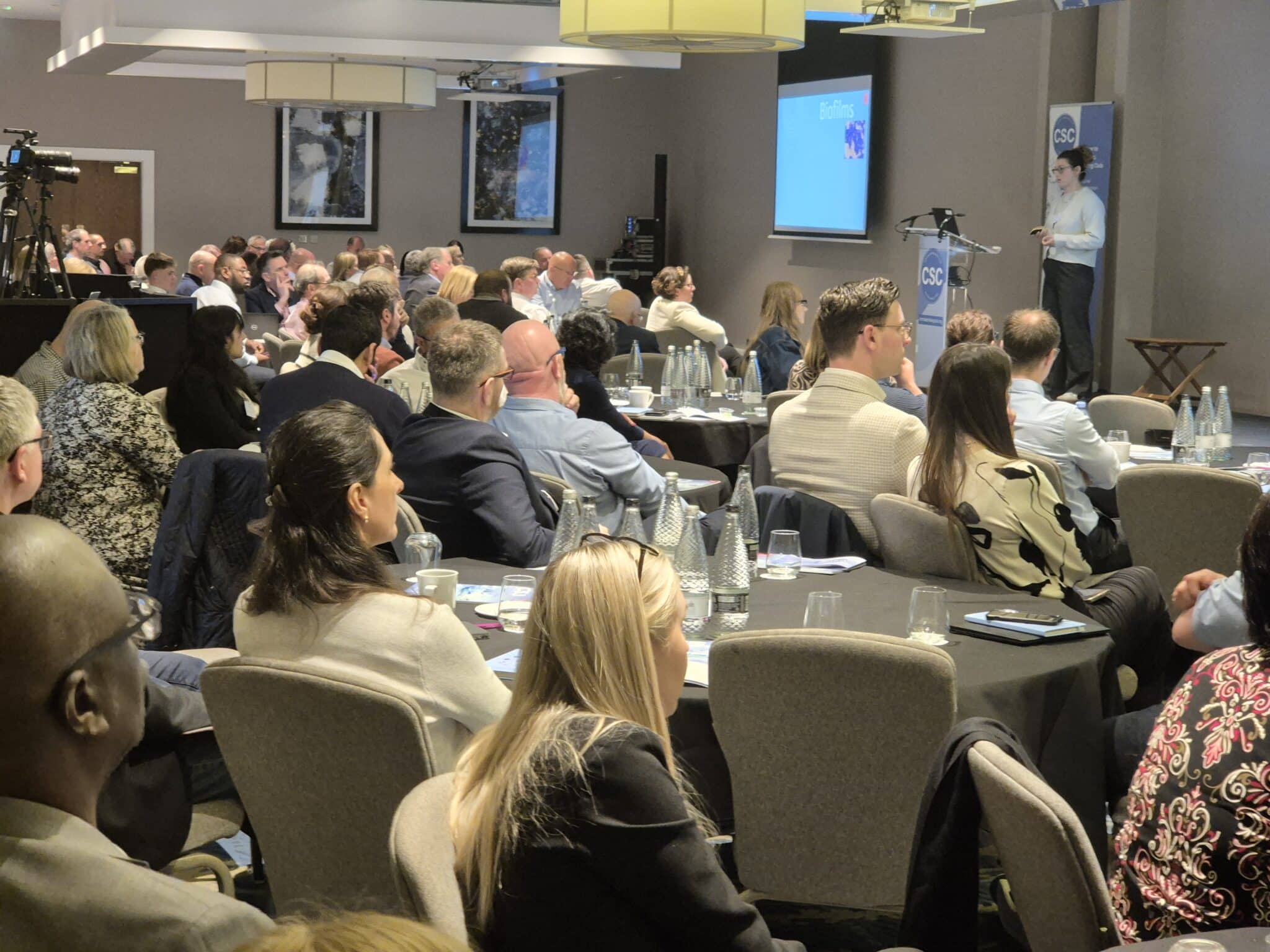
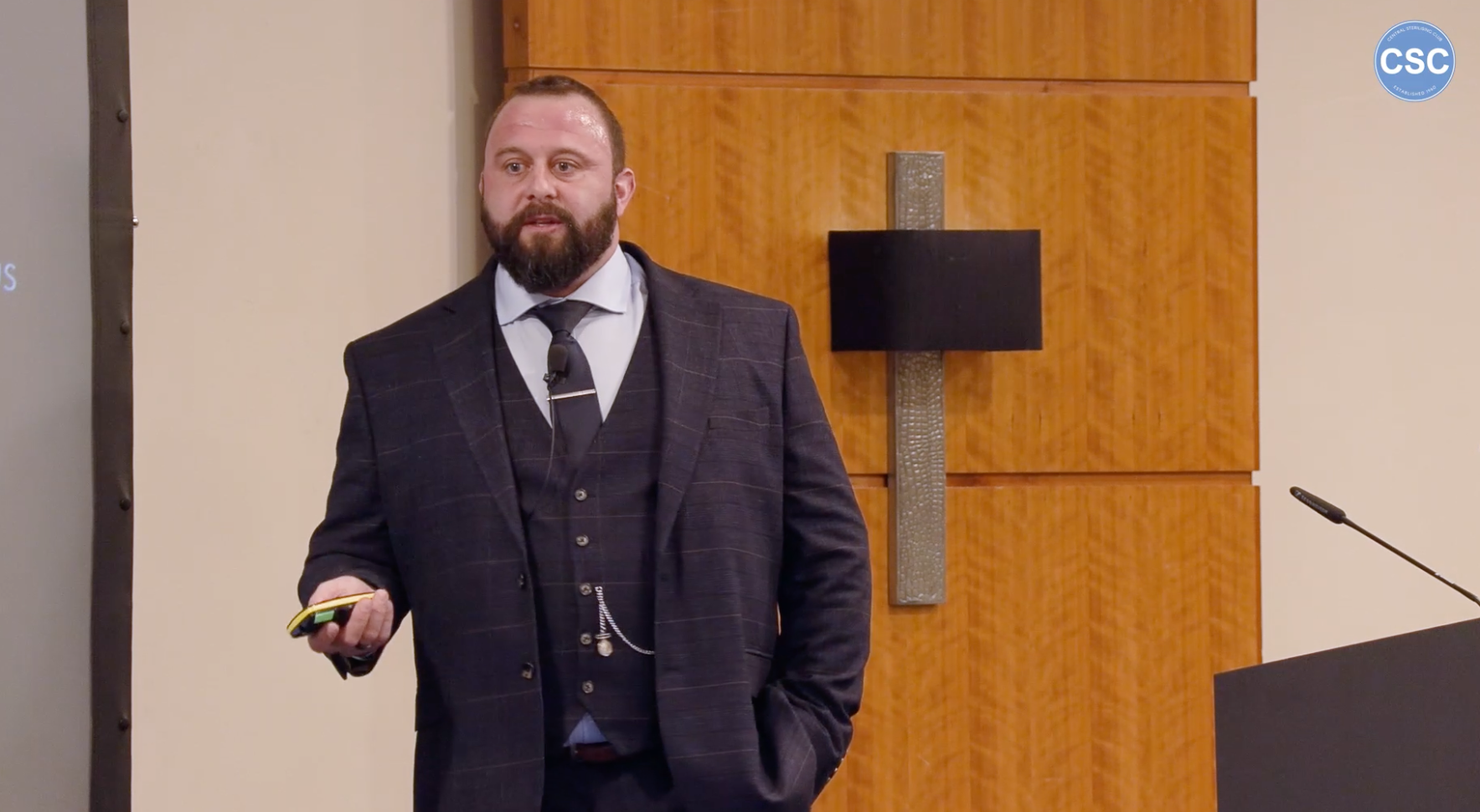
At a recent professional session, Rob Warburton, Trust Decontamination Lead for Manchester University NHS Foundation Trust and Communications Director for the Institute of Decontamination Sciences, explored the breadth of the decontamination lead role and the practical hazards that can affect patient safety, staff safety and organisational assurance.
The discussion highlighted a central message: decontamination leadership is far more than oversight of sterile services. Done properly, it requires strategic direction, strong governance, effective audit, documented staff competence and assurance that equipment and medical devices can be safely decontaminated throughout their lifecycle.
What is a decontamination lead?
Across healthcare organisations, the decontamination lead role can be interpreted in different ways. In some organisations, responsibility may be assigned to someone with previous experience of decontamination; in others, it may sit with an operational service manager or a senior board-level postholder. Each approach carries risks if the individual lacks the authority, scope, governance support or specialist knowledge needed to provide effective assurance.
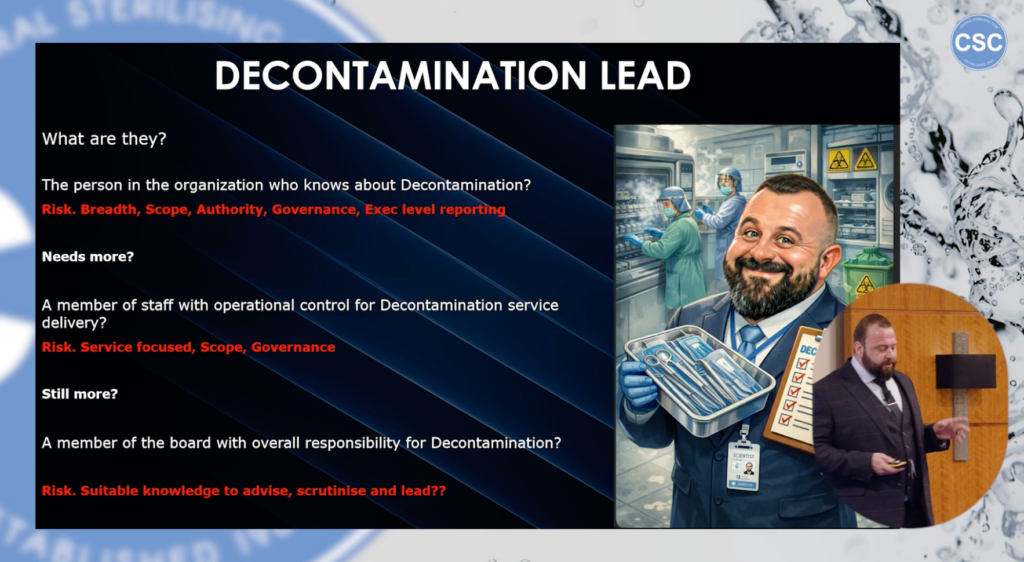
The role should be understood as organisation-wide. It requires oversight of all decontamination practices, equipment, staff competencies and quality systems, ensuring that activity aligns with national guidance, regulatory standards and local policy.
Five core responsibilities
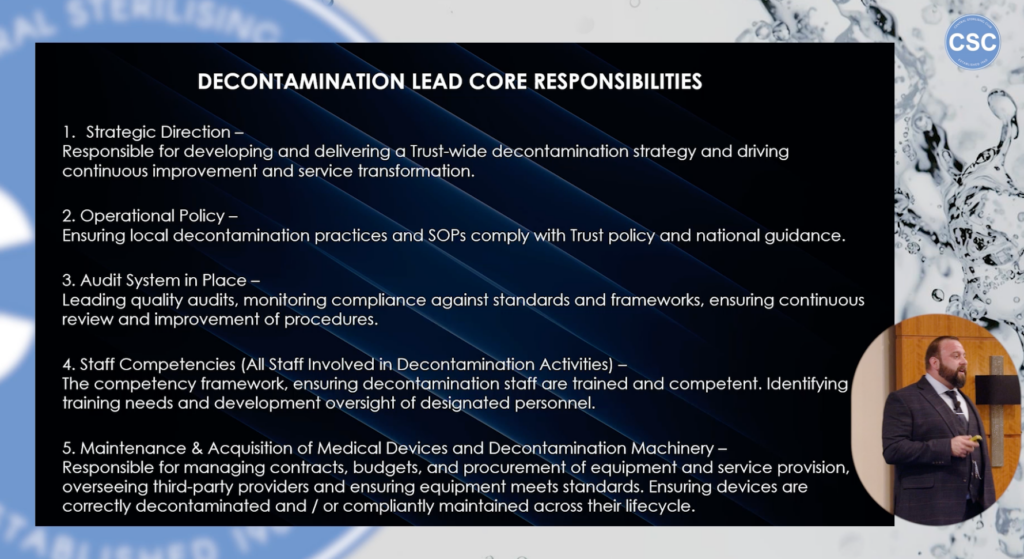
- Strategic direction: developing and delivering an organisation-wide decontamination strategy and driving continuous improvement.
- Operational policy: ensuring decontamination policies, procedures and local practice align with national guidance and organisational standards.
- Audit and assurance: maintaining a robust audit system that monitors compliance, identifies risk and supports continual improvement.
- Staff competence: ensuring all staff undertaking decontamination activity are trained, competent and supported by clear records.
- Equipment and device governance: ensuring medical devices and decontamination equipment are suitable, maintained, validated and compatible with local processes.
Beyond sterile services
A key theme was the importance of looking beyond centralised sterile services. Decontamination activity can occur across many settings, including endoscopy units, laundry services, laboratories, mortuary areas, dental services, birthing pools, neonatal equipment, CBRN decontamination units, heater-cooler devices, ultrasound probe systems and local clinical areas.
These local or specialist processes can fall outside routine assurance if they are not actively identified, audited and included within competency frameworks. Decontamination leads therefore need a clear view of where reusable devices are being cleaned, disinfected or sterilised across the whole organisation.
Ten hazards to consider
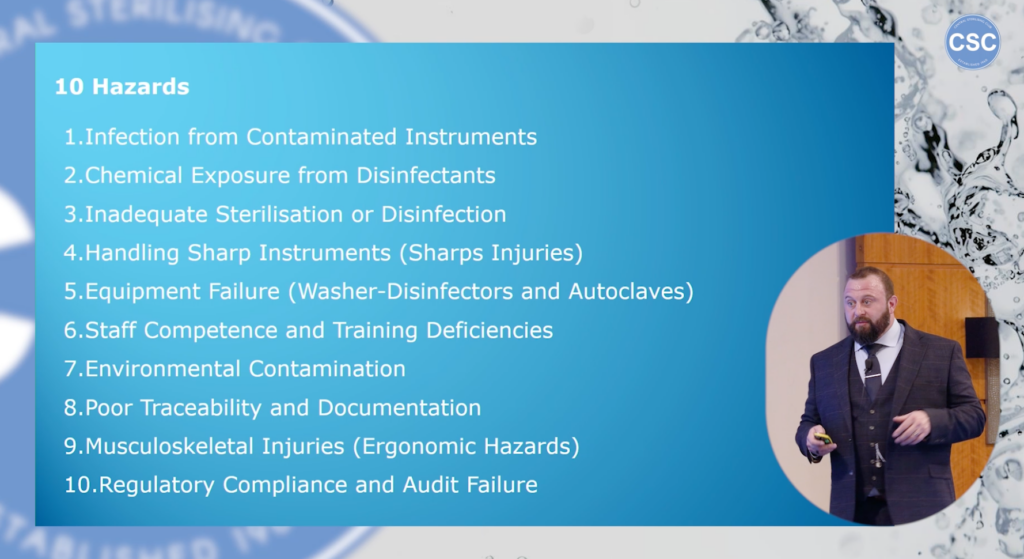
The four priority risks
While many hazards exist, the presentation focused on four areas that remain particularly important for assurance: staff competency and training, contaminated instruments, poor traceability and documentation, and inadequate sterilisation or disinfection.
1. Staff competency and training
Competency is a national concern. The Health Services Safety Investigations Body highlighted decontamination of surgical instruments as a patient safety issue, including the need for stronger assurance, governance and competency arrangements. NHS England’s 2024 technical bulletin on competency frameworks also reinforces the need for board-level commitment and defined knowledge, skills and behaviours for sterile services and decontamination staff.
Training is not limited to sterile services and endoscopy teams. Any staff member undertaking decontamination activity must be trained and must have evidence of competence. Without written records, organisations may struggle to demonstrate that devices were processed safely and that staff were competent to undertake the task.
2. Contaminated instruments
Contaminated instruments remain a critical risk. Every incident should be logged through the organisation’s risk management system, supported by appropriate risk assessment, escalated to board level where required and reported through relevant national routes when applicable.
The decontamination lead has a key role in ensuring that incidents are not treated as purely operational concerns. They must be visible within governance processes so that risks are understood, monitored and acted upon at the right level.
3. Traceability and documentation
Electronic patient records offer major benefits, but they can create traceability gaps if decontamination information is not fully captured. Paper-based labels and stickers often provided a simple association between a device and a patient record. Modern systems need to replicate this assurance reliably for sterile services, endoscopy, outpatient procedures and local decontamination processes.
Questions for organisations include: can the system record the device used, the decontamination cycle, the patient association and the operator? Does it work for flexible endoscopes used outside endoscopy departments? Does it capture ultrasound probe decontamination, hydrogen peroxide systems, UV systems or three-step wipe processes?
4. Inadequate sterilisation or disinfection
The presentation challenged the assumption that inadequate sterilisation and disinfection are low risks in modern healthcare. Examples included ultrasound probes that require high-level disinfection, surgical handpieces requiring correct irrigation and orientation, Kerrison rongeurs that are difficult to clean effectively, and flexible endoscopes where design features, residual matter and biofilm can make complete decontamination challenging.
Flexible endoscopes were highlighted as a particular area of concern. The discussion emphasised the need to improve pre-cleaning verification, consider more effective ways of accessing areas that brushes cannot reach, and explore sterilisation for higher-risk scopes where clinically appropriate.
Key takeaways for decontamination leads
- Define the role clearly and ensure it has the authority, scope and governance support required.
- Map all decontamination activity across the organisation, not just centralised services.
- Ensure all staff undertaking decontamination activity have documented training and competency records.
- Build audit systems that capture local, specialist and emerging decontamination processes.
- Make traceability part of digital transformation, especially where EPR systems replace paper-based records.
- Escalate contaminated instruments and decontamination risks through appropriate governance routes.
- Challenge assumptions about what is “safe enough” and keep reviewing emerging evidence, device design and decontamination methods.
Conclusion
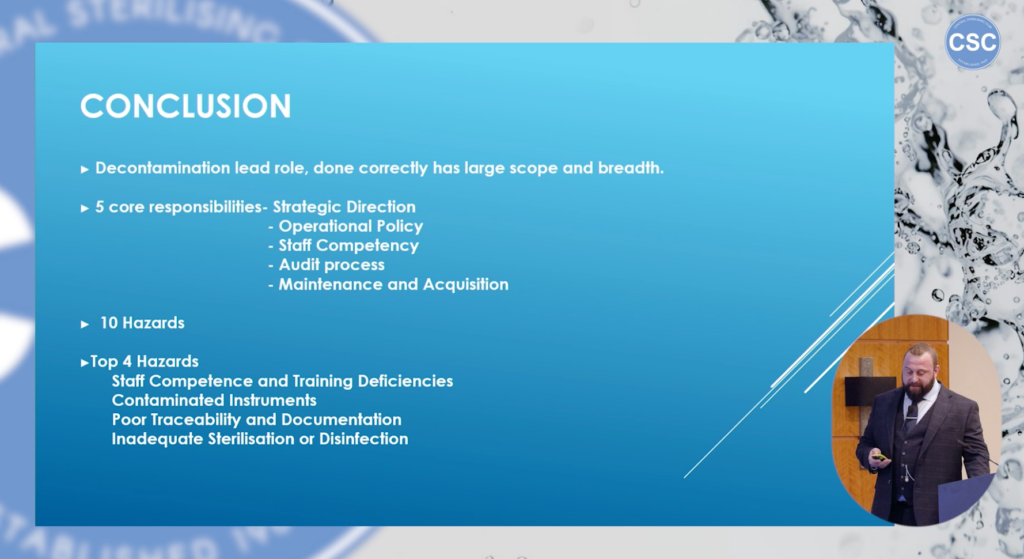
The role of the decontamination lead is complex, broad and central to patient safety. It requires technical knowledge, strategic influence and the confidence to bring operational risks to the attention of senior leaders. By strengthening governance, competency, traceability and assurance, organisations can better protect patients, support staff and maintain confidence in the safety of reusable medical devices.