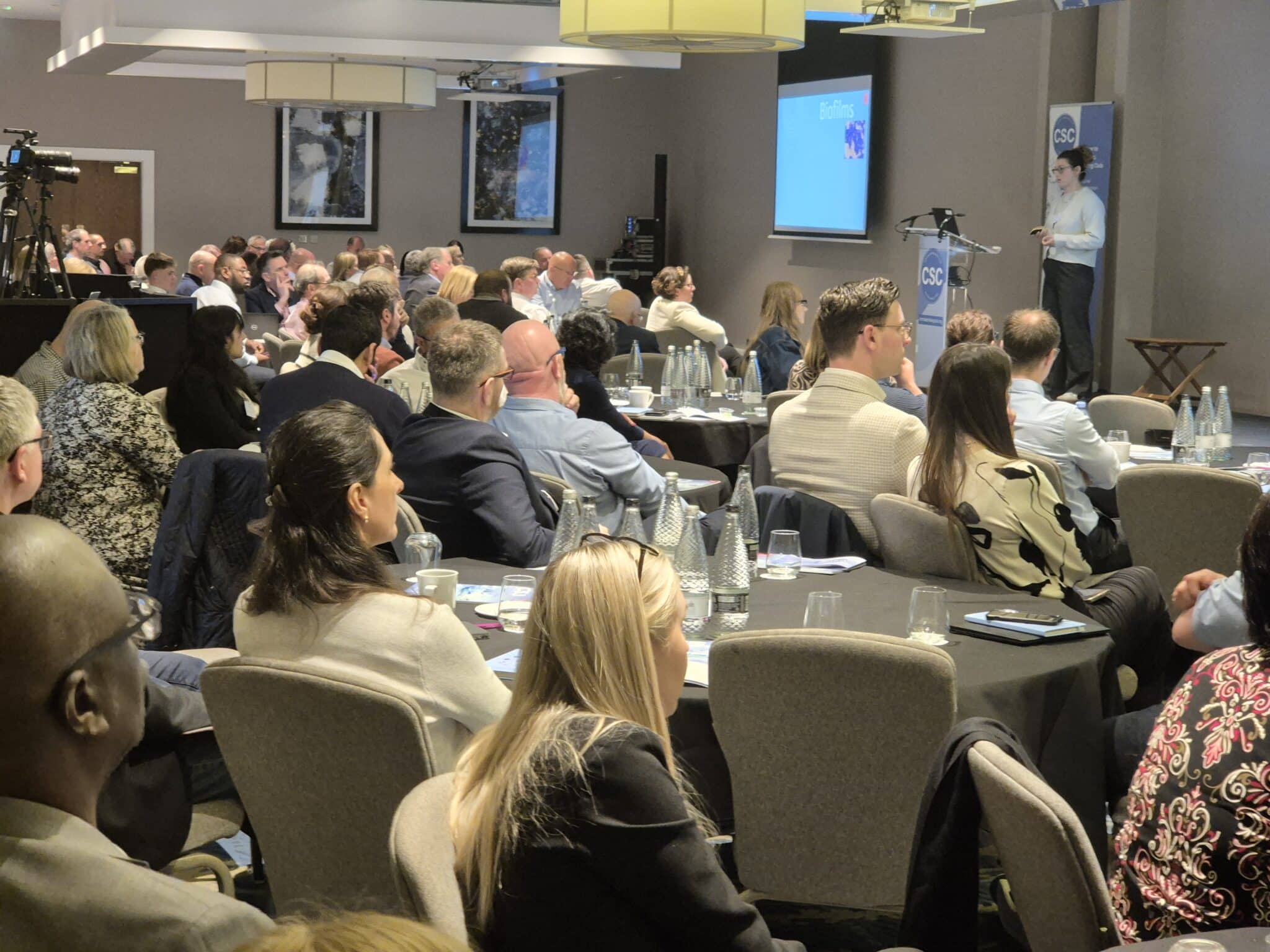
Healthcare professionals working in infection prevention, decontamination and sterile services are united by one central purpose: keeping patients safe. As the NHS continues its journey towards net zero, that purpose must remain at the heart of every sustainability decision.
The message from this session was clear: decontamination teams are not a barrier to sustainability. They are a vital part of the solution. By preventing infection, reducing waste and using resources wisely, CSSD teams can support greener healthcare without compromising standards or patient safety.
Patient Safety Comes First
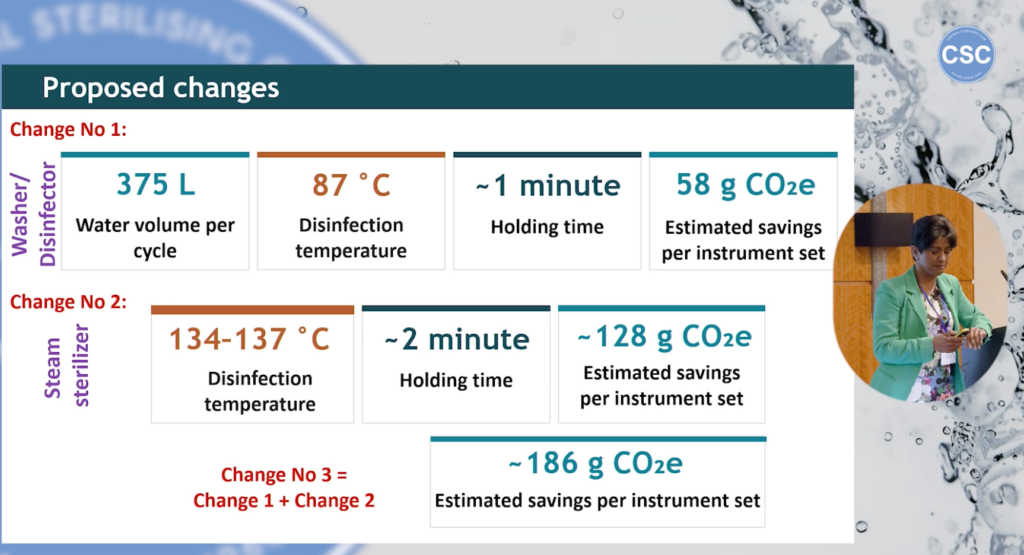
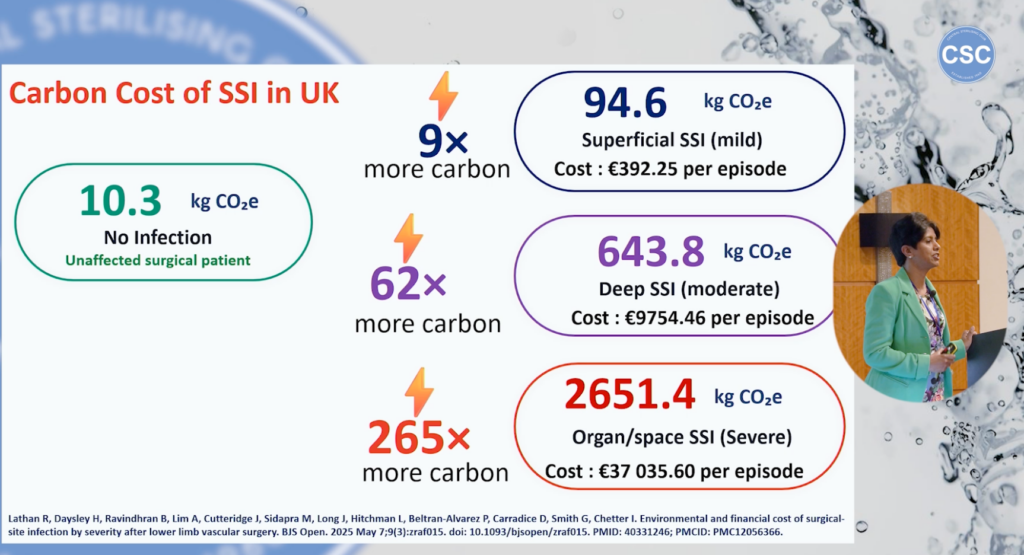
A key warning from the presentation was the danger of making apparently simple changes to reduce emissions, such as lowering washer-disinfector temperatures or shortening sterilization holding times, without fully considering standards, validation and infection risk.
Decontamination processes are designed to achieve safe, reliable outcomes. If time, temperature or other critical parameters are changed without proper assessment, microorganisms may survive and patients may be exposed to avoidable harm. Sustainability initiatives must therefore be assessed through the lens of infection prevention, HTM requirements, validation, clinical sign-off and post-implementation monitoring.
The strongest sustainability contribution decontamination teams can make is to prevent infection. Every avoided surgical site infection prevents additional treatment, readmissions, antibiotics, investigations, bed days and further carbon emissions.
CSSD: A Sustainability Opportunity

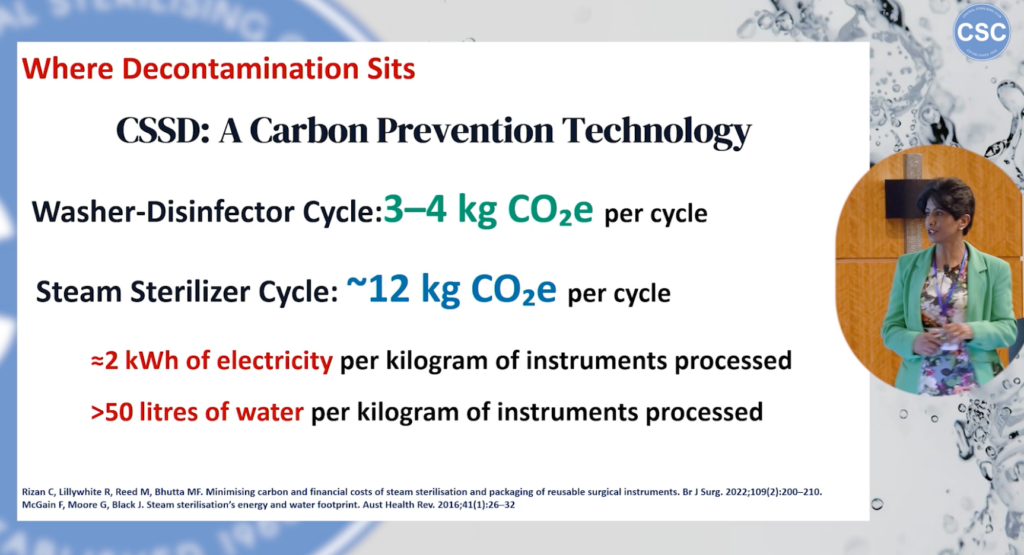
CSSD activity accounts for a meaningful proportion of the carbon footprint associated with surgery. Instrument washing, disinfection, sterilization and packaging all require energy, water and materials. With many CSSD departments operating across the UK, even modest improvements in safe, evidence-based practice can have a significant cumulative impact.
The presentation highlighted several areas where departments can make progress without compromising patient safety: optimising machine loading, improving waste segregation, reviewing packaging choices, using reusable systems appropriately and rationalising surgical trays.
Safe Wins for Greener Decontamination


Several practical actions were identified as safe and achievable starting points for CSSD teams:
- Maximise machine loading: running washer-disinfectors and sterilizers at optimal load levels can reduce unnecessary energy and water use.
- Rationalise surgical trays: reviewing instruments with surgical teams can remove rarely used items, reduce tray weight and improve efficiency.
- Improve waste segregation: ensuring recyclable materials are correctly identified and separated can reduce avoidable incineration.
- Use reusable systems effectively: rigid containers and other reusable options can offer environmental benefits when used for their full lifecycle.
- Own the data: baseline measurements, carbon calculations and post-change monitoring help teams demonstrate impact and protect safety.
Tray Rationalisation: A Practical Starting Point
One of the most compelling opportunities discussed was surgical tray rationalisation. Many trays contain instruments that are rarely or never used, but every opened set still requires full decontamination, inspection, packing and sterilization. Reducing unnecessary instruments can cut carbon emissions, save money, reduce manual handling risks and improve theatre efficiency.
A practical approach is to begin with one high-volume procedure, work closely with surgeons and theatre colleagues, photograph and list tray contents, and categorise instruments by how often they are used. Instruments used routinely should remain in the core tray, while rarely used items may be moved to a clearly labelled conversion tray. Items that are never used can be removed following agreement and governance review.
Successful tray rationalisation depends on communication, clinician engagement and monitoring. If staff begin opening additional trays or individually wrapped instruments more often, the intended carbon savings may be lost.
Questions to Ask Before Any Sustainability Change
Before implementing any change in decontamination practice, teams should ask:
- Does the proposal maintain patient safety and infection prevention standards?
- Has it been assessed against relevant HTM guidance and validation requirements?
- Is there clinical and operational sign-off?
- Have baseline data and expected outcomes been recorded?
- How will the impact be monitored after implementation?
Could there be unintended consequences, such as increased individually wrapped items or lower machine loading?

From Risk to Leadership
The session closed with an important reminder: CSSD teams should not be seen as a problem to be solved by net zero programmes. Instead, they should be recognised as leaders in safe, sustainable healthcare.
By reframing the conversation around prevention, evidence and data, decontamination professionals can show that patient safety and sustainability are not competing priorities. Done well, they strengthen each other.
Key message: Protecting patients is the first principle of sustainable decontamination. Net zero must be achieved through smarter systems, better data and safer processes — not by compromising the standards that prevent harm.