How automated pre-cleaning, enhanced traceability and sustainable design are helping endoscopy teams meet today’s operational and compliance challenges.
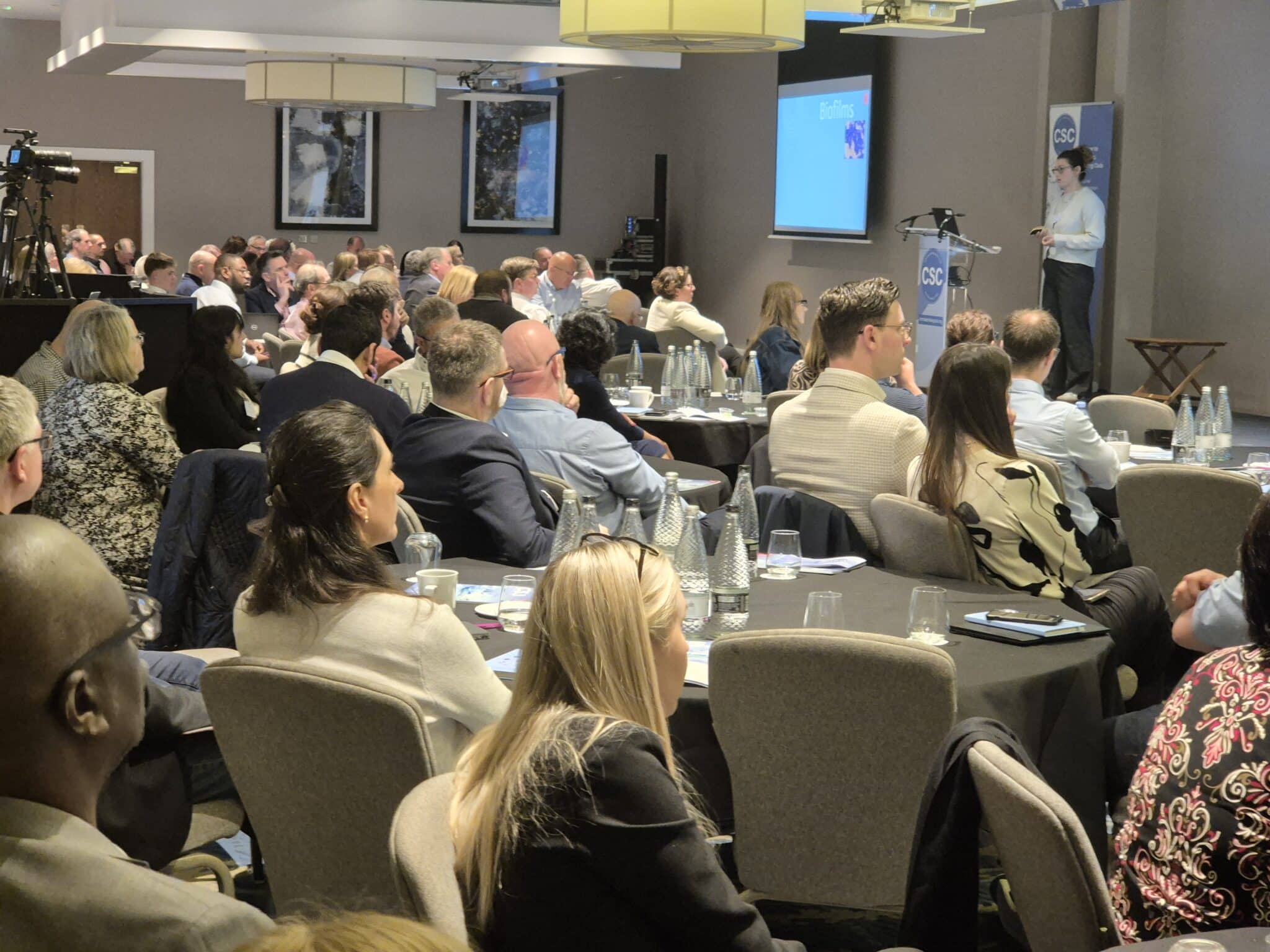
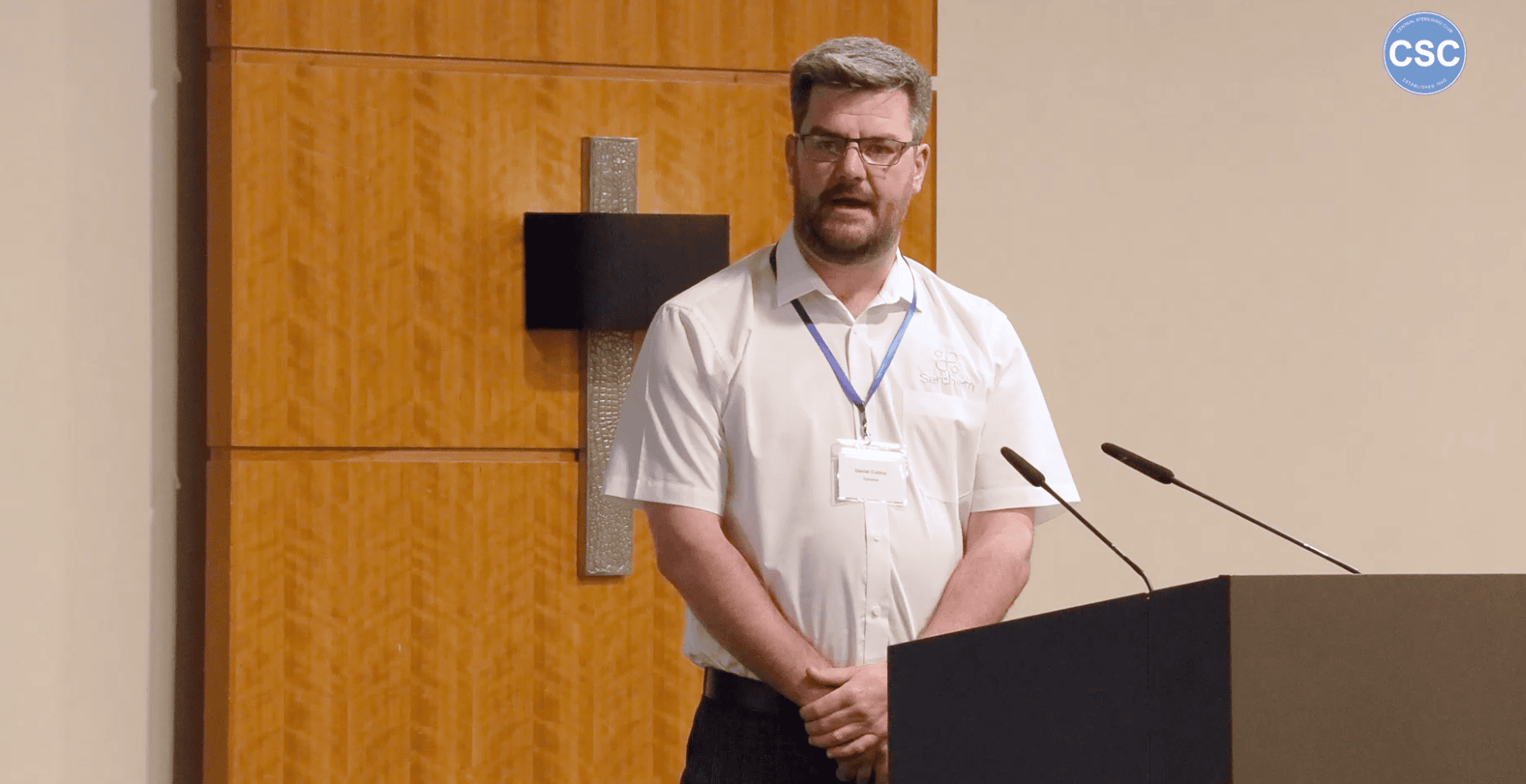
Endoscopy services are under increasing pressure to deliver safe, consistent and efficient reprocessing while meeting rising expectations around sustainability, traceability and regulatory compliance. At a recent industry session, Dan Collins introduced the Gandy AEPS 10G automated endoscope pre-cleaning system and explained how the next generation of pre-cleaning technology is designed to support teams working in busy clinical environments.
Responding to a Changing Landscape
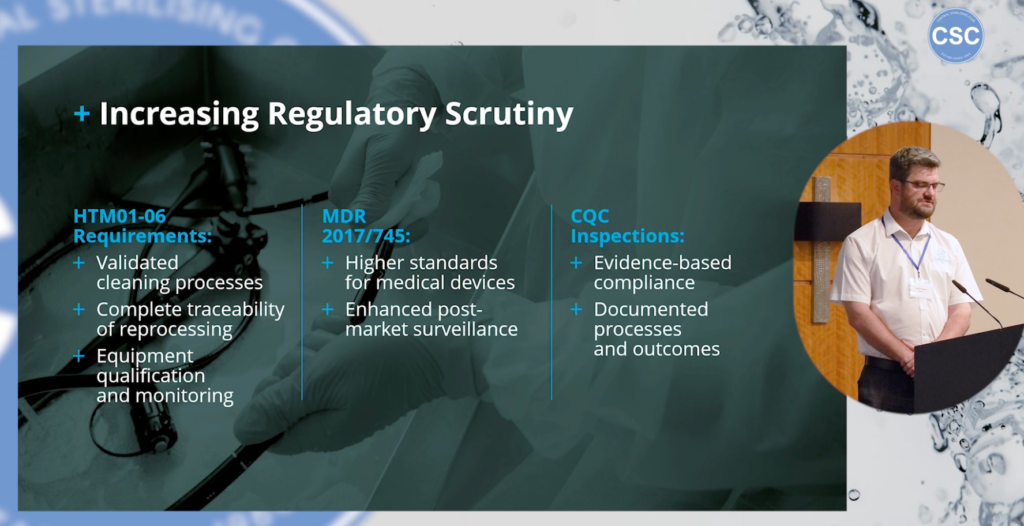
As regulatory requirements continue to evolve, departments are being asked to demonstrate validated cleaning processes, complete traceability and robust monitoring. At the same time, the NHS drive towards greener endoscopy is encouraging teams to reduce single-use plastics, minimise chemical use and optimise water and energy consumption.
Operational pressures are equally significant. Many services are managing staff shortages, recruitment freezes, rising throughput demands and cost constraints. In this context, reliable systems that reduce manual handling, standardise practice and support audit readiness are becoming increasingly important.
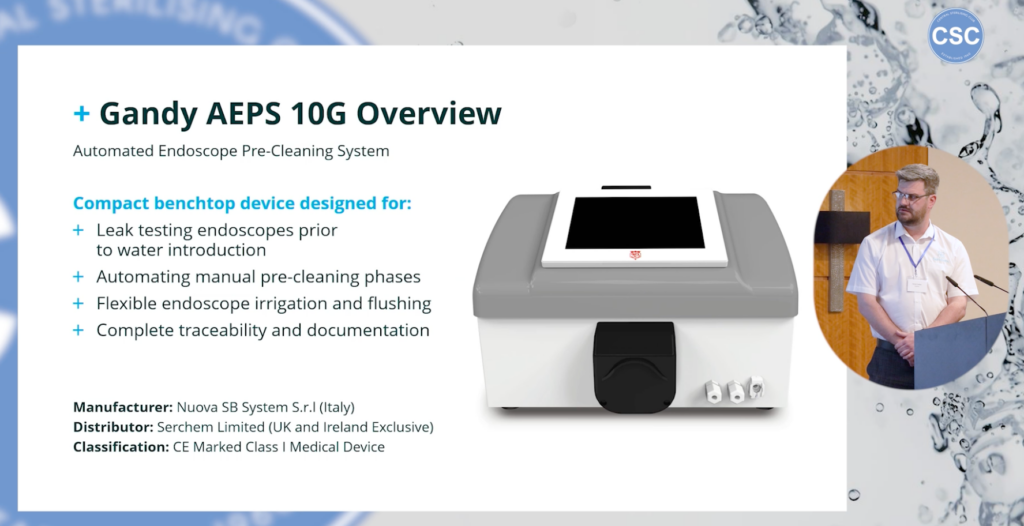
Introducing the Gandy AEPS 10G
The Gandy AEPS 10G is an automated endoscope pre-cleaning system designed to support the critical first stage of reprocessing. It automates key steps including leak testing, detergent dosing, flushing, rinsing and purging, while providing a built-in track-and-trace record for each cycle.
Using universal connections, the system is designed to work with major endoscope manufacturers and can be configured to suit different scope types and departmental workflows. Its touchscreen interface is intended to be simple for staff to use, even in wet working environments, while access levels allow managers and administrators to review reports, data and settings as required.
Standardised Cycles, Flexible Configuration
Sustainability was a central theme of the presentation. The AEPS 10G uses reusable tubing that can be removed at the end of the day and processed through high-level disinfection, rather than being discarded. This helps reduce daily consumable waste and supports departments seeking practical ways to align with greener endoscopy goals.

The presentation also highlighted sustainable packaging for CIRM chemistry products, including collapsible packaging that can deliver a significant reduction in plastic use compared with traditional rigid bottles. Reducing the volume and weight of waste placed into clinical waste streams can also support cost control as well as environmental objectives.
Enhanced Traceability and Remote Oversight
Traceability is increasingly important for quality assurance and compliance. The AEPS 10G records key information about each cycle, including the user, the endoscope, the cycle selected and the leak test process. The system can support data access through USB export, an integrated printer option or cloud-based reporting.
For managers, cloud access can provide visibility across one or multiple sites, allowing teams to review activity, monitor compliance and analyse trends. This can be particularly useful when demonstrating workload increases, reviewing performance over time or supporting conversations around resource planning.
Built-In Safety and Staff Support

Leak testing remains one of the most important safeguards in endoscope reprocessing. The AEPS 10G is designed to carry out wet or dry leak testing and alert users where a leak is detected. If a scope fails the leak test, the system stops further processing, helping to protect equipment and prevent avoidable damage.
Automation also reduces the need for repetitive manual syringe flushing, helping to ease physical strain on staff. Preset detergent dosing supports consistent chemical use, while visual and audible prompts guide users through the process step by step.
Part of a Wider Reprocessing Ecosystem
The AEPS 10G forms part of the wider Gandy ecosystem, which includes transport, automated endoscope reprocessing and storage solutions. Using standardised connections across the reprocessing pathway can help simplify workflows and support a more joined-up approach to endoscope management.
Evolution, Not Revolution
The message from the session was clear: existing systems remain reliable and continue to have an important role, but the AEPS 10G represents the next step for departments looking to strengthen traceability, reduce consumable waste, support staff and improve process consistency.

For teams reviewing their pre-cleaning processes, the case for change may be strongest where sustainability targets, enhanced traceability, remote data access or consumable reduction are already priorities. As endoscopy services continue to balance safety, efficiency and environmental responsibility, automated pre-cleaning offers one practical route towards a more standardised and sustainable future.