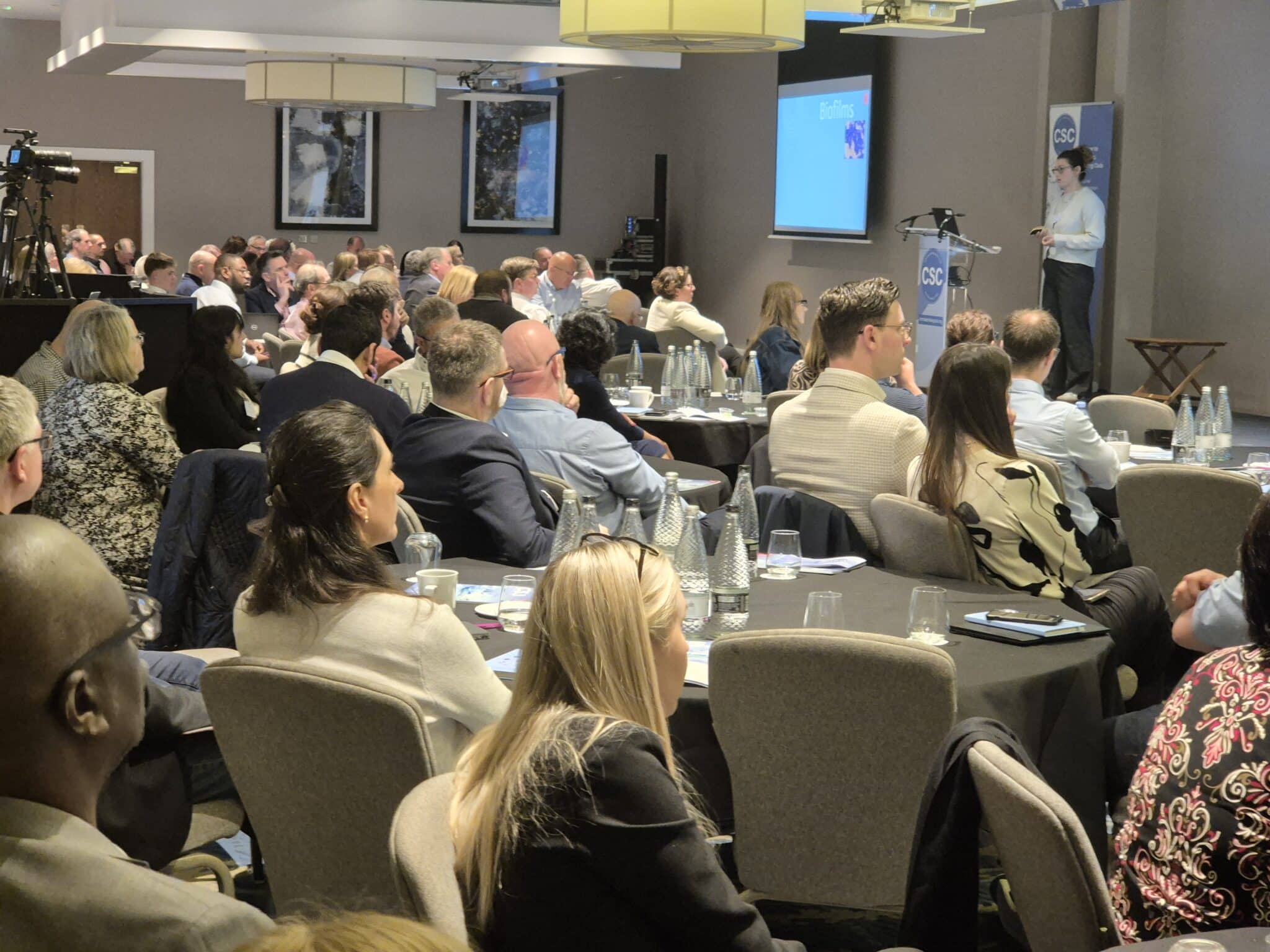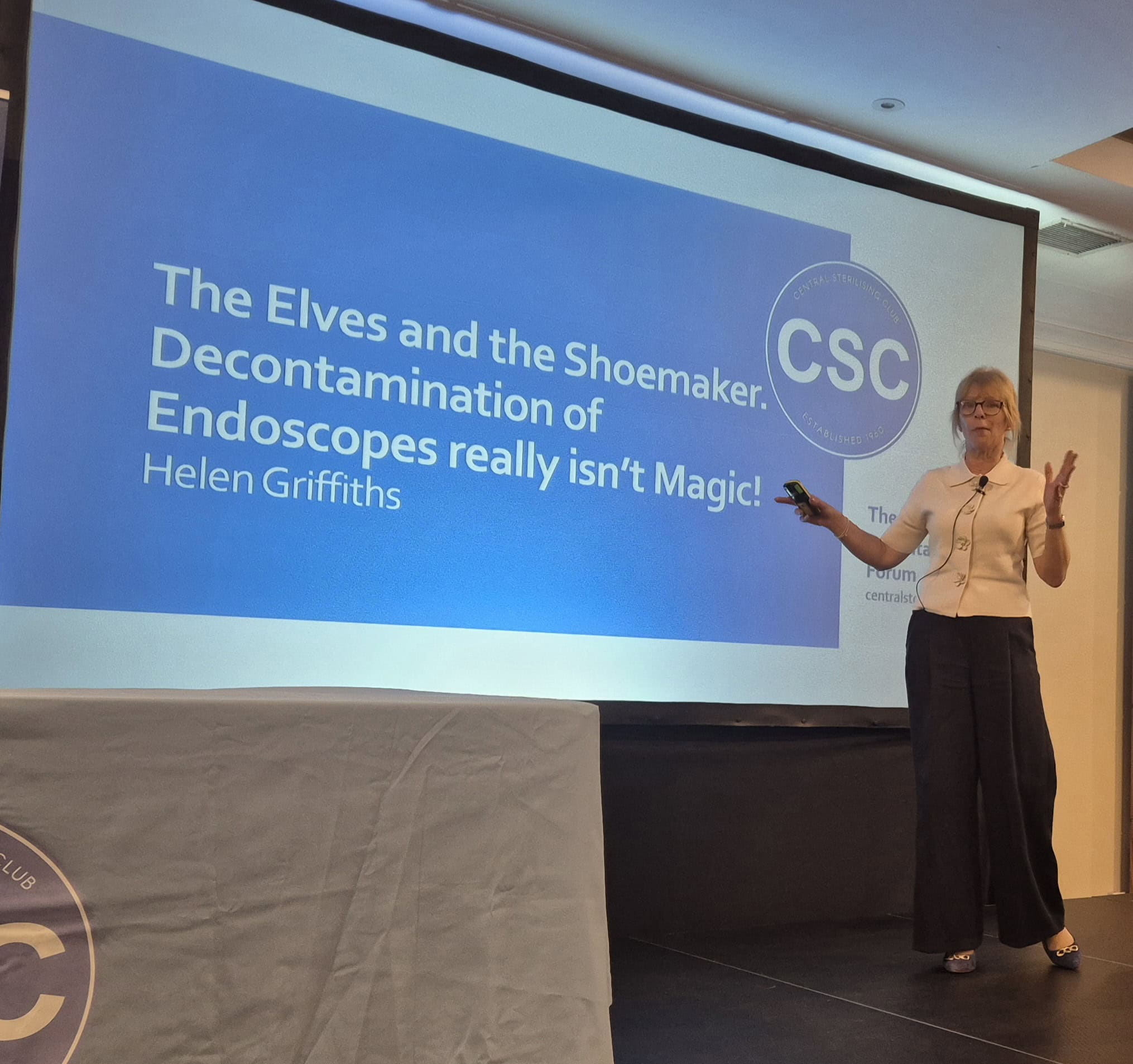
At a recent afternoon session, award-winning nurse consultant, clinical endoscopist and JAG assessor Helen Griffith challenged endoscopy and decontamination teams to think differently about the instruments they use, the risks they manage and the responsibilities they share.
From “Magic” to Managed Risk

Helen Griffith opened with a familiar observation: for many endoscopists, decontamination can feel like magic. A scope appears in the morning, ready to use, with little thought given to where it came from, what processes it has been through or where it will go next. Her message was clear: that mindset has to change. Endoscopists must understand enough about decontamination to be assured that the instrument in their hand is fit for purpose for the patient in front of them.
Why Responsibility Cannot Sit in One Room

Drawing on 36 years in gastroenterology and endoscopy, including 13 years as BSG decontamination advisor, Helen described decontamination as “everybody’s business”. The legal and clinical implications are significant: organisations must be able to demonstrate that they have done everything reasonably possible to protect patients from avoidable harm.
She reminded delegates that risk in healthcare is not theoretical. Infection, perforation and bleeding risks are discussed with patients during consent, but rare events still affect real people. If an incident occurs, the burden falls on the organisation to evidence that appropriate systems, checks and controls were in place.
Training, Culture and the Pressure on Decontamination Teams
A recurring theme was the gap between endoscopy training and decontamination practice. Helen noted that decontamination is still not routinely embedded in endoscopist training, despite being central to safe patient care. In her own practice, trainees are not allowed to touch a scope until they have spent time in the decontamination unit.
She urged services to make this exposure standard. Trainees should understand what happens to an instrument before it reaches the procedure room, and decontamination staff should have a visible role in endoscopy governance meetings.
When Pressure Creates Risk


Helen highlighted how operational pressure can undermine safe processes. Demand for particular scopes, high list volumes, rushed manual processes and interruptions can all create conditions where mistakes become more likely.
Examples included delayed processing of endoscopes, scopes removed from drying cabinets before completion, and instruments used at or beyond the accepted three-hour window. While emergency clinical judgement may occasionally justify exceptional decisions, Helen stressed that routine practice must follow agreed standards consistently.
Learning from Incidents
From brush breakages and retained biopsies to chemical failures and patient recalls, Helen shared examples that demonstrate how decontamination incidents can have serious consequences. One recalled incident involved hundreds of patients after chemicals were incorrectly loaded into a machine.
She also described incidents where a scope was mistakenly reused on another patient. Such cases can trigger complex follow-up, including patient disclosure, blood testing and review of processes. Often, the root issue is not a lack of goodwill but unclear responsibility, poor handover or assumptions about who has completed a task.
Off-Label Scope Use: Small Numbers, Big Implications

Helen addressed the debated use of gastroscopes for colonoscopy, particularly when a narrower instrument may help avoid repeating a procedure for a patient. While data from a retrospective review across five endoscopy units suggested this happens in a small proportion of cases, the implications are important.
Using a device outside its intended use can shift liability from the manufacturer to the organisation. Helen’s advice was not that off-label use should never happen, but that it must be supported by a fully documented risk management process, clear clinical justification and agreed mitigation measures.
Key Takeaways for Services

- Build decontamination experience into endoscopist training programmes.
- Ensure decontamination is a standing agenda item at Endoscopy User Group meetings.
- Involve clinical, decontamination and procurement teams when purchasing new scopes.
- Agree clear processes for managing used, clean and time-limited instruments in procedure rooms.
- Review readmission, infection and mortality data with decontamination in mind.
- Document risk assessments for any off-label use of devices.
A Final Reflection

Helen closed with a reminder that busy teams can become so focused on keeping services moving that they do not always stop to question whether there is a better way. Her call to action was simple: pause, think about the risks, involve the right people and keep the patient at the centre of every decision.
In short: decontamination is not a background process. It is a shared clinical safety responsibility, and every team involved in endoscopy has a role in making it visible, understood and consistently managed.