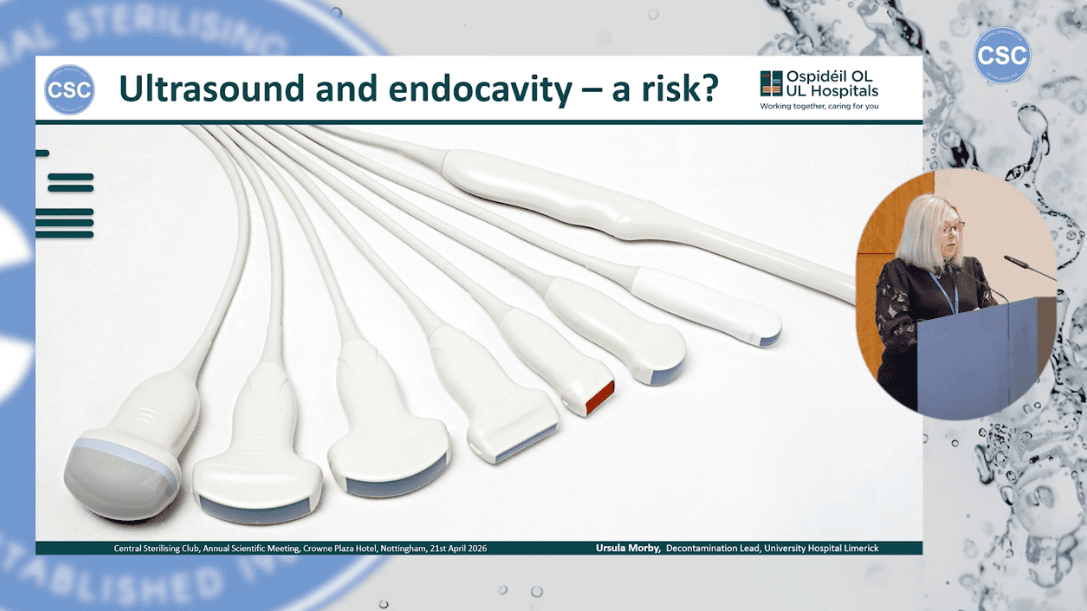
Highlights from a CSC presentation on why ultrasound probe reprocessing deserves greater attention across healthcare settings.
Ultrasound is widely recognised as a safe, effective and essential diagnostic tool. Yet, as Ursula Morby, Decontamination Lead for the UL Hospitals Group in Limerick, explained in her recent presentation, the probes used every day across hospital departments can present an underestimated infection prevention risk when they are not cleaned, disinfected and tracked consistently.
Her central message was clear: ultrasound probe decontamination is not simply a technical process. It is a patient safety issue that depends on standards, training, traceability, teamwork and a shared understanding of risk.
Why ultrasound probes are different

Unlike equipment managed within contained areas such as sterile services or endoscopy, ultrasound probes are used across many departments, often in fast-moving clinical environments. This makes them harder to locate, monitor and audit. As their use expands, including through point-of-care ultrasound devices that can move between wards and departments, the challenge becomes even greater.
Ursula described the practical reality of trying to trace devices, understand where they have been used, and confirm how they have been decontaminated. The more widely probes are used, the more important it becomes to ensure every user understands their responsibility.
The evidence: contamination is a real risk
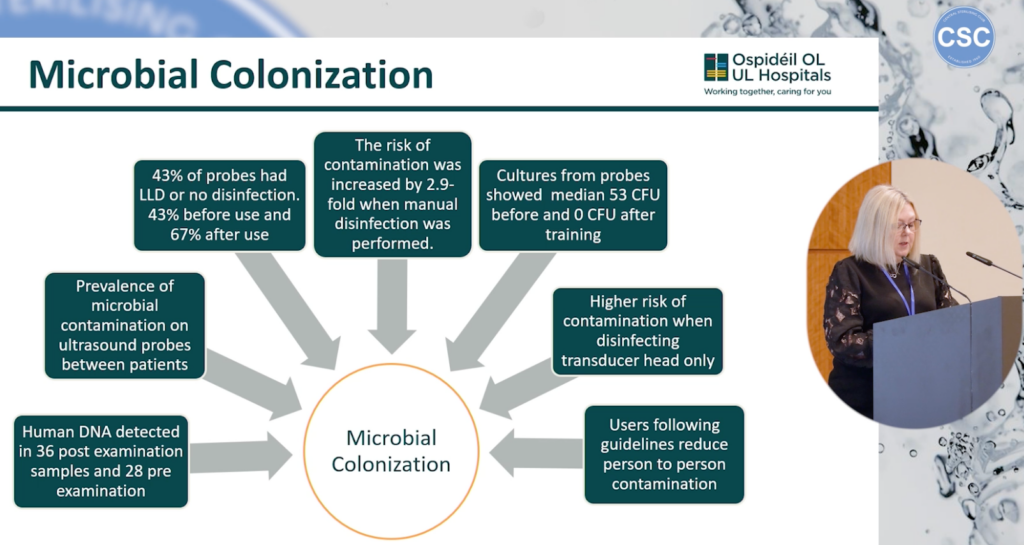
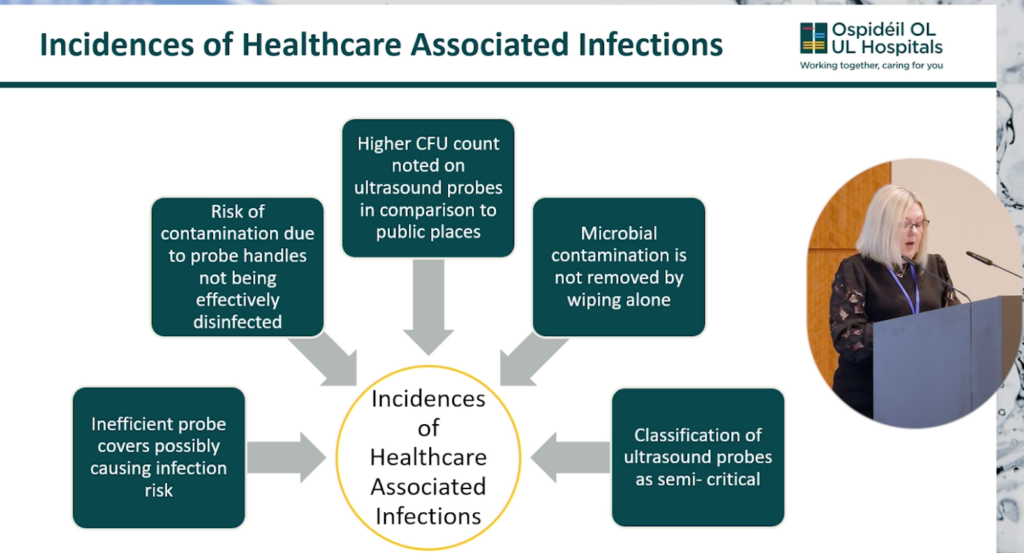
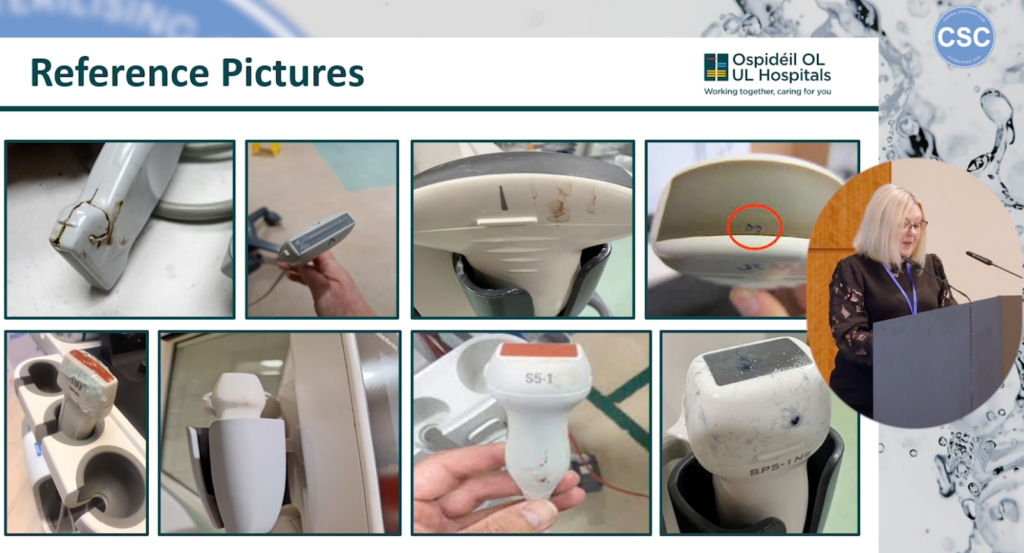
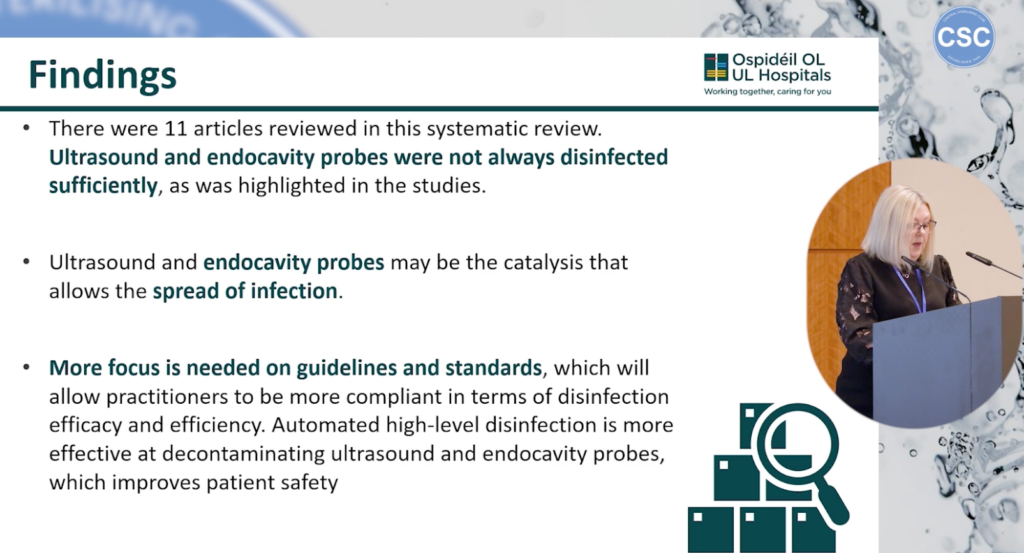
Drawing on her systematic review, Ursula highlighted studies showing that ultrasound probes can carry microbial contamination when reprocessing is incomplete or inconsistent. Her review considered 289 articles, with 11 studies included for detailed analysis. The findings pointed to recurring concerns around microbial colonisation, healthcare-associated infection risk, and the need for better education and training.
Several striking examples were discussed, including the detection of human DNA on probes before and after examinations, contamination despite the use of probe covers, and evidence that manual processes can be less reliable than automated high-level disinfection. Ursula also emphasised that probe covers are important, but they are not a substitute for effective decontamination.
Automated high-level disinfection improves reliability
A key theme of the presentation was consistency. Manual cleaning and disinfection processes can work when performed correctly, but they depend heavily on human behaviour. Automated systems provide greater reassurance because they offer a validated, reproducible and traceable process.
Ursula explained that automated high-level disinfection helps reduce variation, supports compliance and strengthens confidence that probes are safe for the next patient. However, access to equipment alone is not enough. Departments must also accept the risk, use the systems provided, and embed the process into everyday practice.
Education changes behaviour
One of the strongest messages was the importance of training. Staff need to know not only what the standards say, but why they matter. Understanding the link between inadequate decontamination, microbial contamination and patient harm is essential if teams are to change habits and maintain best practice.
Training should be provided, recorded and refreshed for everyone involved in cleaning, disinfecting, transporting, storing or using ultrasound probes. Ursula also noted the importance of practical solutions, such as clear standard operating procedures and easy-to-follow processes built into the clinical workflow.
Point-of-care ultrasound adds a new challenge
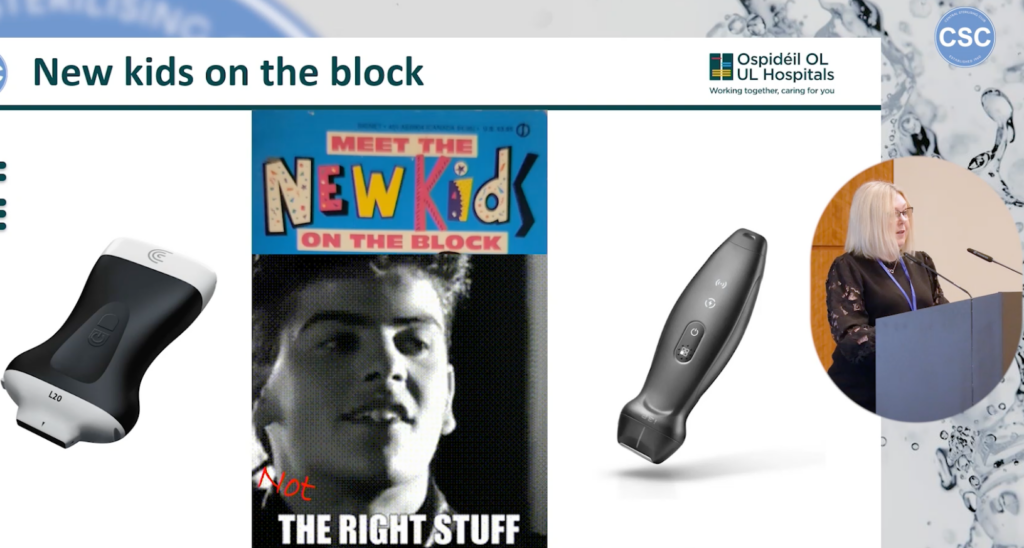
Point-of-care ultrasound brings clear clinical benefits, offering rapid diagnostics at the bedside. However, smaller portable devices can be harder to track, audit and manage. Ursula described how early involvement in roll-out planning allowed decontamination requirements to be built into processes from the start, including clear instructions, appropriate wipes, sterile gel and probe covers.
This proactive approach shows how decontamination teams can support innovation while protecting patients. As ultrasound technology becomes more mobile, governance must move with it.
Key takeaways for teams
- Recognise ultrasound probes as a potential source of contamination, especially when used on mucous membranes, non-intact skin or vulnerable patients.
- Use probe covers appropriately, but do not treat them as a replacement for decontamination.
- Prioritise automated high-level disinfection where required and ensure processes are validated, consistent and traceable.
- Provide and record training for all staff involved in any stage of probe use or reprocessing.
- Build decontamination considerations into the introduction of new ultrasound technology, especially portable point-of-care devices.
- Keep the patient at the centre of every decision about cleaning, disinfection and safe reuse.
A shared responsibility
Ultrasound probe decontamination may be a complex challenge, but it is not one that decontamination teams can solve alone. It requires collaboration between clinicians, infection prevention teams, decontamination specialists, procurement, governance leads and managers.
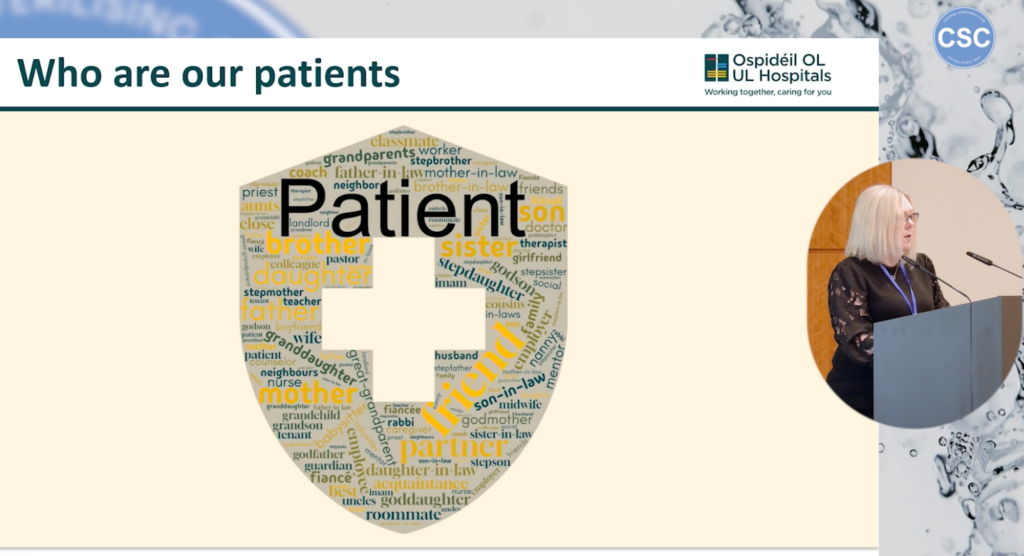
Ursula closed with a reminder that patients may never see the work that goes into safe reprocessing, but they are the reason it matters. Whether the patient is a relative, a friend, a colleague or ourselves, the aim remains the same: to provide safe, high-quality care every time.
Final thought: The probe may look small and harmless, but safe decontamination is a big part of protecting patients.