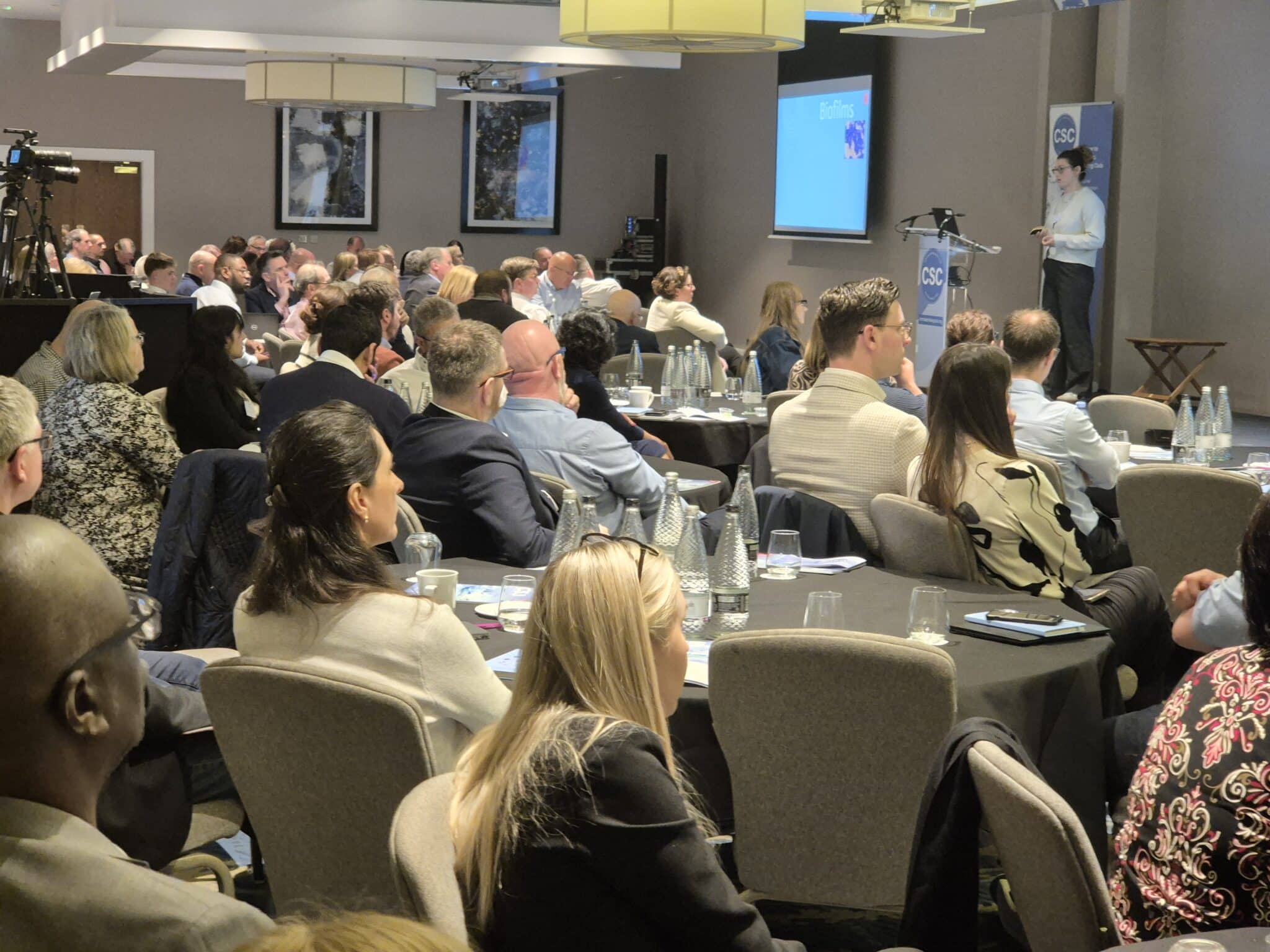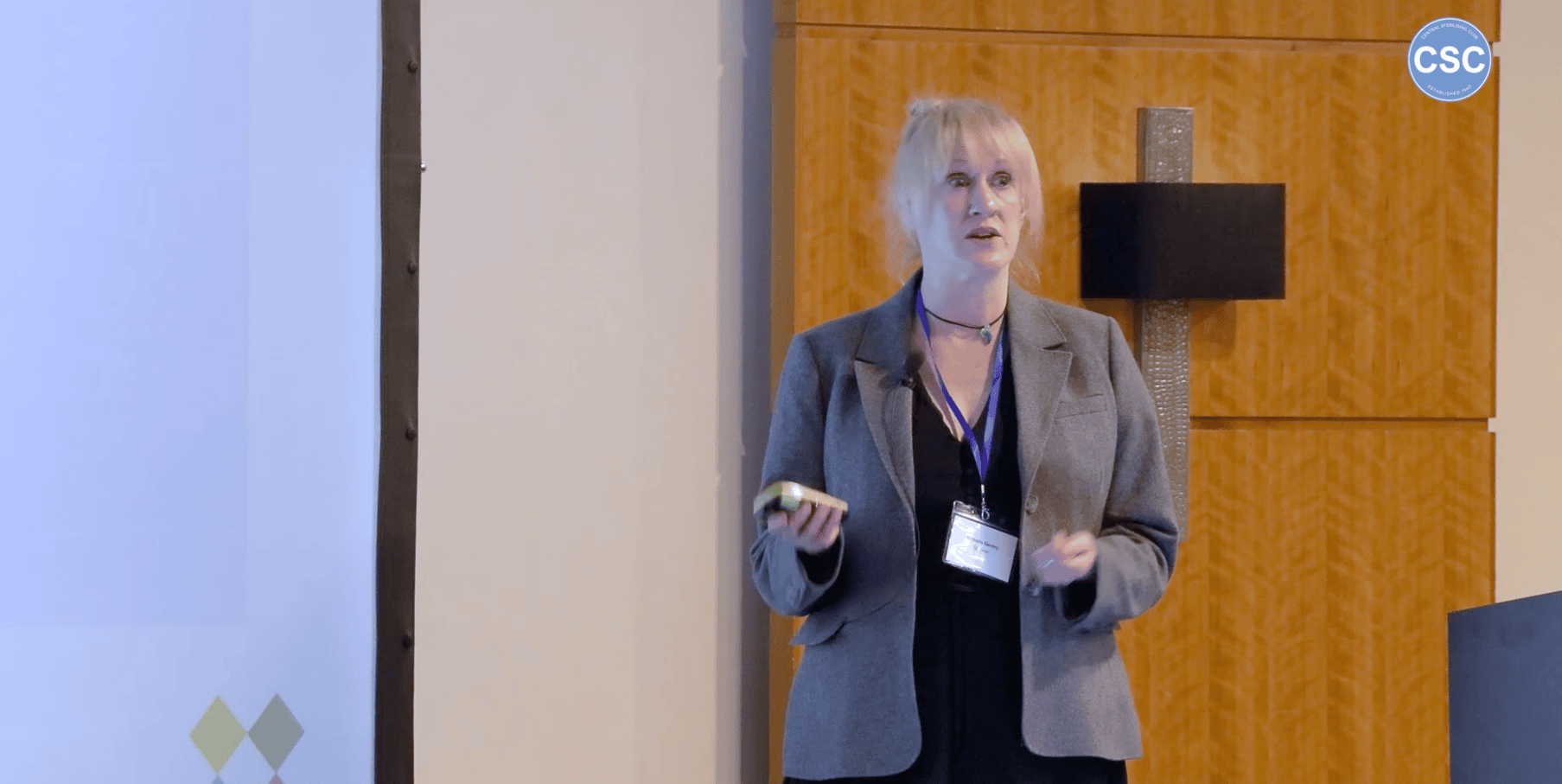
Highlights from Victoria Gentry’s presentation on reducing healthcare-associated infection risk through safer water and wastewater design.
Healthcare environments are designed to protect patients, but sometimes the very systems built into those spaces can introduce unexpected risks. In a thought-provoking session, Victoria Gentry, Infection Prevention Nurse Consultant at Frimley Health NHS Foundation Trust, shared how her organisation tackled a major antimicrobial resistance challenge by looking closely at water, wastewater and the built environment.
Why wastewater became a patient safety priority
Victoria explained that antimicrobial resistance is having a growing impact on patient outcomes, morbidity, mortality and wider patient safety. Increasingly, outbreaks in healthcare settings are revealing the role of the built environment in transmission risk — with wastewater systems proving especially significant.

Warm, wet pipework carrying waste can act as a reservoir for antimicrobial-resistant gram-negative bacteria. At Frimley Health, this became a central concern after a carbapenemase-producing Enterobacterales outbreak was identified in June 2023. Standard infection prevention measures, including isolation and precautions, were not enough to control the outbreak.
Finding the link: the hospital’s wastewater system
The investigation found that patients in different parts of a large hospital site had acquired genetically linked organisms despite having no clear connection through staff, equipment, procedures or time. The common factor was the hospital wastewater system, which flowed across the site.
Older hospital estates, legacy pipework, long dead legs, damaged or leaking pipes, poor basin design and incorrect tap installation all contributed to the risk. Even new builds were not immune, with construction debris, early system filling and inadequate commissioning time all identified as potential hazards.
The sink problem


For decades, handwash basins were added wherever infection prevention teams saw a need. However, Victoria highlighted that this well-intentioned approach had placed wastewater outlets close to patients, equipment and clinical activity. Basins were rarely used for hand washing alone. Staff and patients used them for cleaning teeth, disposing of drinks, draining medication and other activities. High-velocity water flow into plugholes created splash zones, potentially contaminating nearby surfaces, equipment and patients.
A new strategy: water-safe care
Frimley Health developed a water and wastewater safety strategy built around the hierarchy of controls. The team prioritised elimination first: where possible, physically removing the hazard by rationalising and removing sinks.
- Highest-risk areas came first: wards with the greatest CPE incidence were prioritised.
- Augmented care areas followed: vulnerable patient groups were reviewed carefully.
- Clinical workflows were redesigned: teams considered where water was genuinely needed and where waterless alternatives could be used.
- Sink etiquette was introduced: where sinks remained, staff were educated to keep surrounding splash zones clear of patients and equipment.
Clinical teams led the change

A key lesson was that sustainable change had to be led by clinical teams. Rather than infection prevention staff simply instructing wards to remove sinks, teams were supported to assess their own risks, review their workflows and identify practical solutions.
The phrase “sinkless mind” emerged from an intensive care nurse and became a useful way to help staff think differently about hand hygiene, with greater emphasis on alcohol-based or other hand sanitiser at the point of patient care.
Patients were part of the solution
Patients, carers and visitors were also involved in shaping education tools and evaluating changes. Their feedback helped ensure that infection prevention measures remained centred on patient safety, experience and dignity.
What changed on the ground
The programme began in haematology-oncology areas, where CPE acquisition was highest. Sinks and handwash basins were removed from clean utility rooms, drug preparation areas, patient rooms and chemotherapy chair spaces.
Later, older people’s medicine wards were included, and a proactive “waterless ITU” project was launched to protect highly vulnerable intensive care patients. In the ITU, handwash basins were reduced from around 26 to just four in carefully selected locations.
Other interventions included installing scrub troughs where handwashing stations were still required, adding foot-operated doors to reduce contact with high-touch surfaces, redesigning dirty utility rooms to support one-way dirty-to-clean workflows, and creating safer water delivery systems without drains beneath them.

Monitoring the impact

Before making changes, the team established a robust surveillance programme. This allowed them to understand baseline risk, monitor the effect of interventions and provide assurance that no additional harm was being created.
- Around 50% of inpatient wards at Wexham Park Hospital now include water-safe care design.
- In haematology-oncology, CPE acquisitions fell from around four per quarter to one case over two and a half years following sink rationalisation.
- The Wexham Park site recorded a 41% decrease in C. difficile infection over the previous year.
- The waterless ICU continued to report no CPE acquisitions, alongside reductions in other gram-negative infections.
- The unit experienced an eight-month period with no healthcare-associated gram-negative bloodstream infections after handwash basin removal.

Lessons for healthcare design
Victoria emphasised that water and wastewater safety must be embedded into infection prevention education, contractor training and design conversations. Healthcare environments should be risk assessed rather than designed through a one-size-fits-all approach.
Although the work attracted press attention, including some negative coverage, it also raised wider awareness of the relationship between wastewater, antimicrobial resistance and patient safety.
Q&A spotlight: screening and everyday practice
During questions, Victoria reflected on CPE screening and everyday sink use. Frimley Health moved from screening only high-risk patients to admission and discharge screening, helping identify patients who arrive colonised and detect possible acquisitions during admission.
She acknowledged that inappropriate sink use is difficult to eliminate entirely. The focus, therefore, is on managing risk: reducing unnecessary sinks, educating staff, using hand sanitiser after washing and drying, and recognising that wastewater will continue to require vigilance.
Key takeaway
Frimley Health’s experience shows that infection prevention is not only about hand hygiene, isolation and screening. It is also about the physical environment: where water flows, where waste collects, how spaces are designed and how clinical teams use them every day.
Summary
By challenging assumptions about sinks and wastewater, and by involving staff and patients in practical redesign, Frimley Health reduced infection risks, strengthened surveillance and embedded water-safe care into its infection prevention culture.