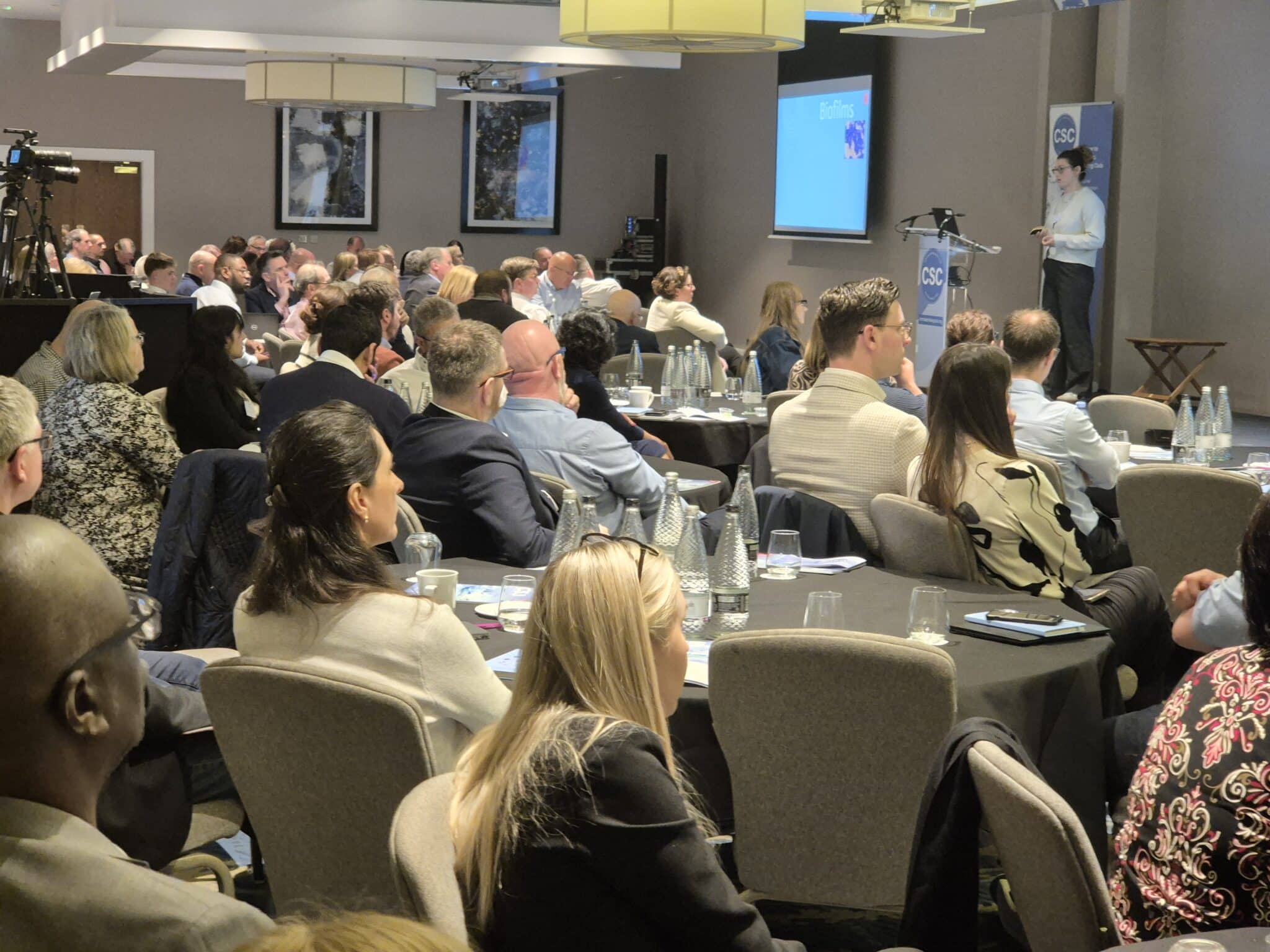
At a recent decontamination and sterile services session, delegates explored the practical challenges of reprocessing phacoemulsification handpieces and other complex lumen devices. The discussion highlighted why cleaning, orientation, drying and adherence to robust procedures are essential to patient safety.
Why Phaco Handpieces Need Close Attention
The session began by revisiting a case that brought phacoemulsification handpiece reprocessing into sharp focus: a failed sterility test that revealed a combination of issues across the cleaning, washing, sterilisation and drying stages.
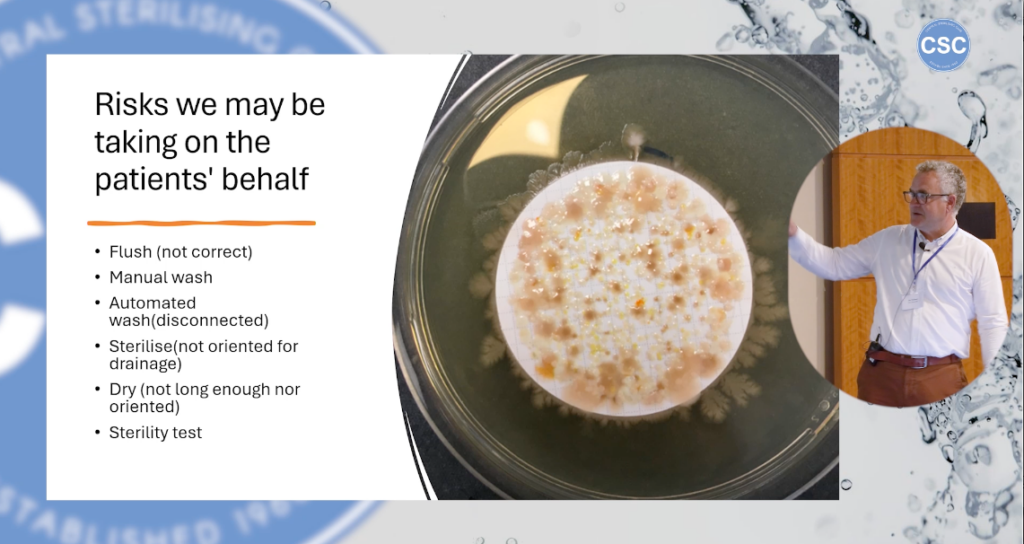
The findings showed that the flush process had not been carried out correctly, lumens had not been connected during automated washing, sterilisation orientation had not supported drainage, and drying time had been insufficient. Together, these factors created conditions where contamination could remain and sterility could not be assured.
Key Learning: Connect, Orientate and Dry
Phacoemulsification handpieces contain narrow internal channels that are difficult, and sometimes impossible, to clean effectively by manual methods alone. If these lumens are not connected during automated washing, the washer-disinfector cannot reliably clean or disinfect the internal surfaces.
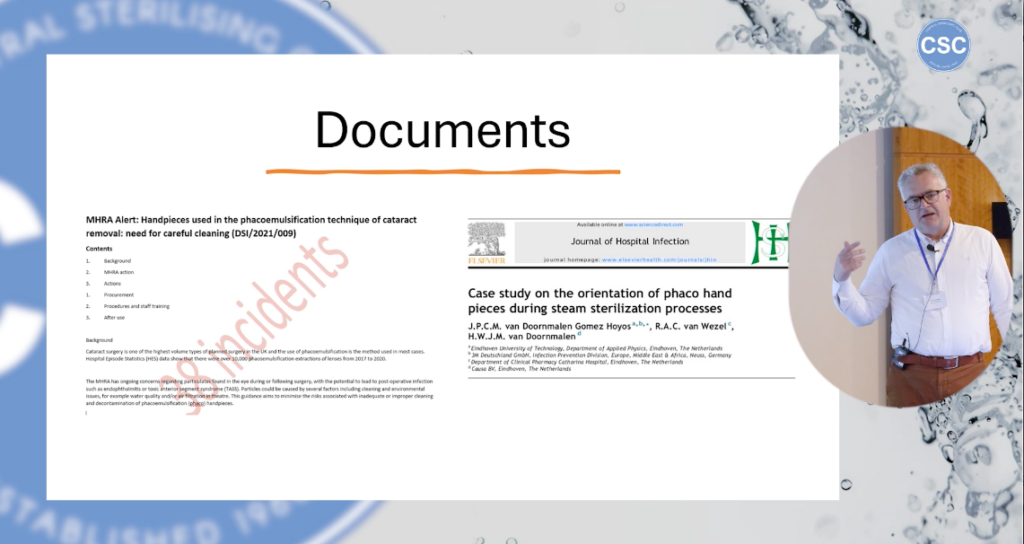
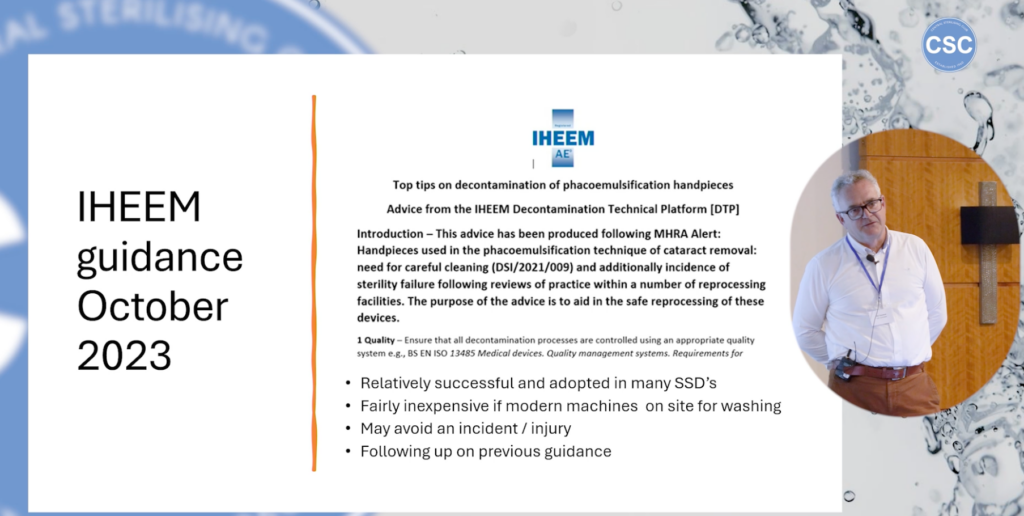
The guidance discussed during the session recommends connecting lumen devices to an automated wash process wherever possible and permissible. This helps ensure that cleaning and disinfection reach the internal pathways, not just the external surfaces.
Orientation is equally important. Positioning handpieces at approximately 45 to 90 degrees from horizontal supports gravitational drainage, helping water escape from internal channels during sterilisation and drying.
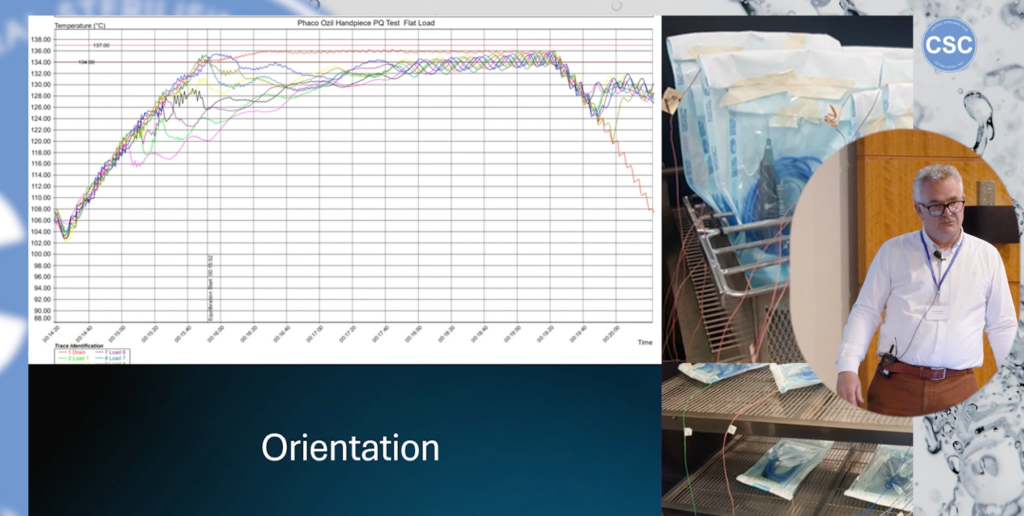
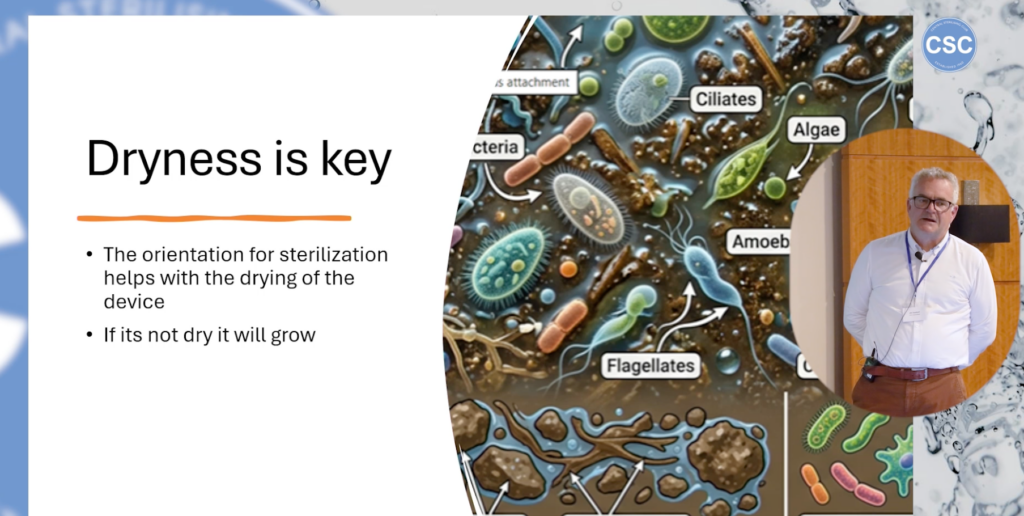
Dryness was repeatedly emphasised as a critical control point. Even where sterilisation has been largely effective, retained moisture can allow microbial growth if bioburden remains. In complex devices, drying is not simply a finishing step; it is central to safe reprocessing.
Instructions for Use: Minimum Standard or Best Practice?
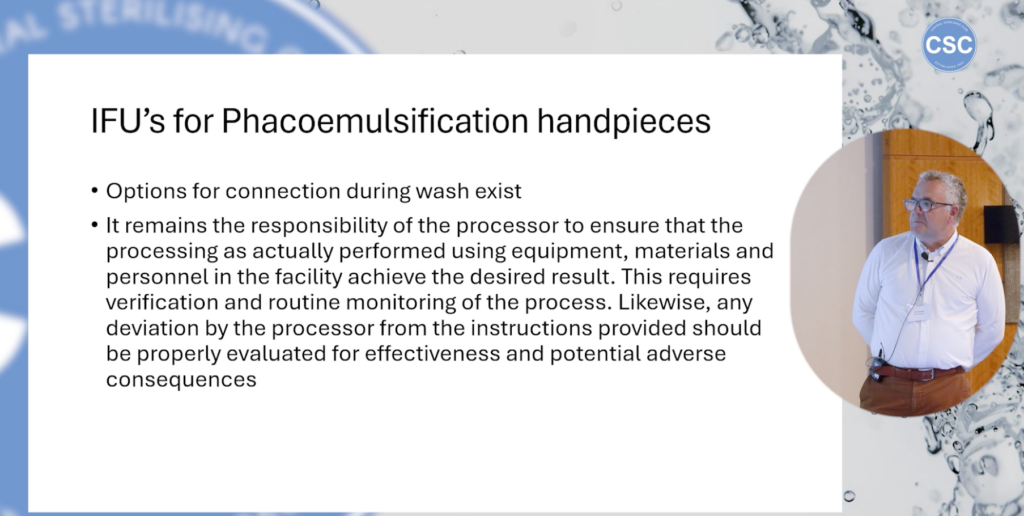
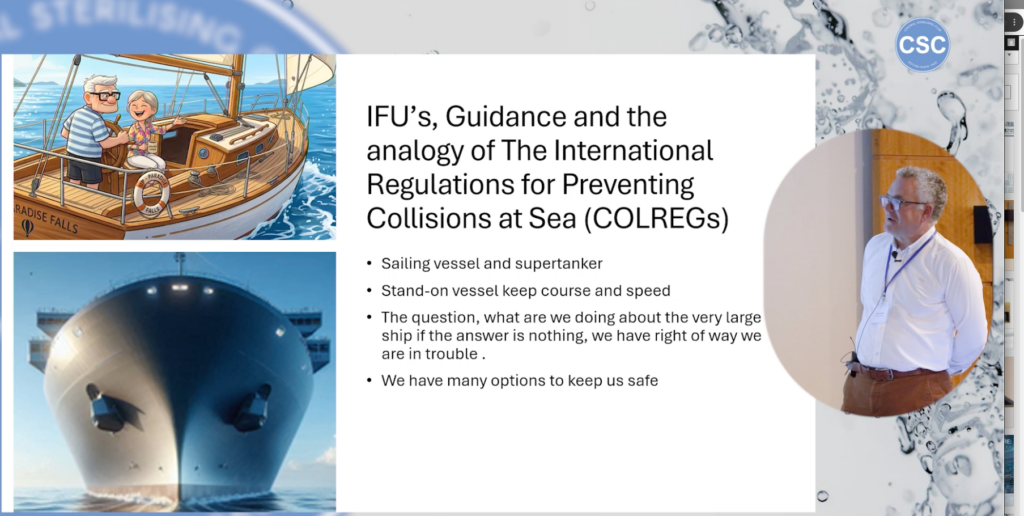
The session also explored the role of Instructions for Use (IFUs). While some IFUs may include manual cleaning options, the speaker reminded delegates that the processor remains responsible for ensuring that reprocessing is effective with the equipment, staff, process and environment actually being used.
A sailing analogy was used to make the point: having “right of way” does not remove the need to act safely. In the same way, choosing the most minimal option within an IFU may not always be the safest practical approach if better risk controls are available.
Learning Across Surgical Services and Endoscopy
Delegates were encouraged to consider lessons from endoscopy, where connecting channels for automated reprocessing is standard practice. The discussion asked whether a similar mindset should be applied more widely to lumen devices in sterile services departments.
Although cost, time and equipment availability remain practical considerations, many modern washer-disinfectors now include connection points that allow internal channels to be flushed during automated processing. While these systems may not monitor flow in the same way as endoscope reprocessors, connecting devices is still a meaningful improvement over leaving lumens unconnected.
Audience Reflections
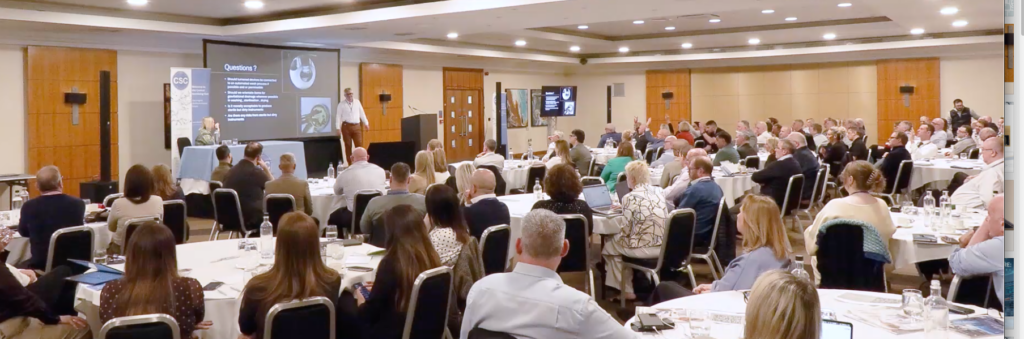
During the session, delegates were asked whether lumen devices should be connected to automated wash processes where possible. The response was overwhelmingly supportive, with the majority agreeing that connection should be the preferred approach.
There was also strong support for orientating items to support gravitational drainage during washing, sterilisation and drying. This reinforced the central message that safe reprocessing depends on how devices are handled throughout the whole cycle, not just on whether they have passed through a steriliser.
The Question of “Sterile but Dirty” Instruments
One of the strongest themes from the discussion was the ethical and clinical concern around instruments that may be sterile but not clean. Delegates agreed that visible or retained contamination is not acceptable, even if an item has undergone sterilisation. The conversation considered risks associated with residual debris, complex instruments, implants and long-term patient safety. Particular concern was raised about uncertainty around diseases with long incubation periods, where risks may not become apparent for many years.
Key Takeaways for Practice
- Connect lumen devices to automated wash processes wherever possible and permitted.
- Ensure internal channels are flushed, cleaned and disinfected, not just external surfaces.
- Orientate devices to support gravitational drainage during reprocessing.
- Recognise drying as a critical safety step, particularly for complex devices.
- Use IFUs carefully, but apply professional judgement and risk assessment when selecting the safest validated process.
- Do not accept instruments that are sterile but visibly or internally dirty.
Final Message
The session provided a clear reminder that effective decontamination relies on every stage of the process working together: cleaning, disinfection, sterilisation, drainage and drying. For complex devices such as phacoemulsification handpieces, small changes in handling and orientation can have a significant impact on safety.
By applying learning from both surgical services and endoscopy, teams can continue to strengthen decontamination practice and reduce avoidable risks for patients.