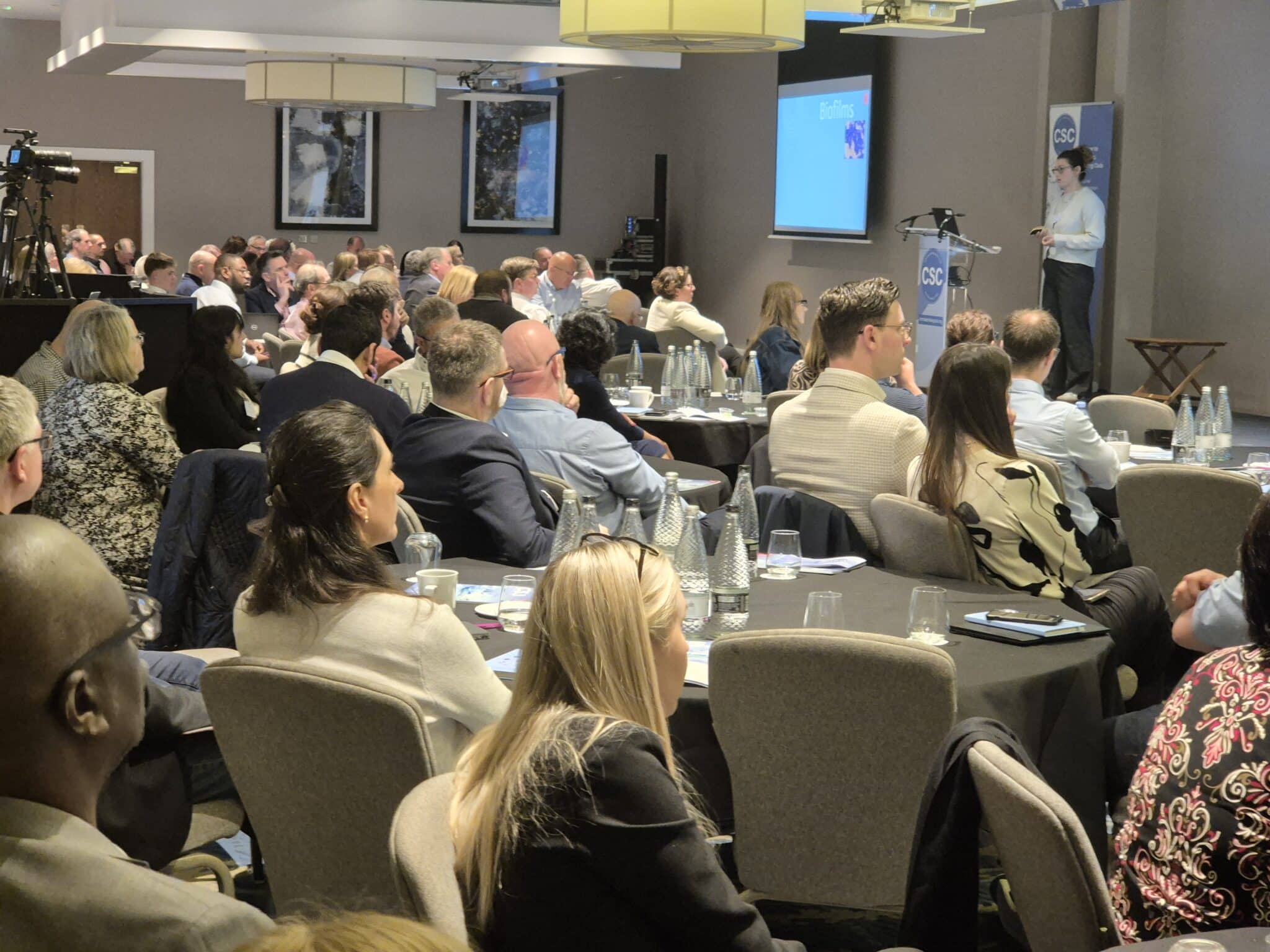

It’s nearly time for the Central Sterilising Club Autumn Study Day 2025! As Editor of the News Bulletin, I would normally have published the review of our Annual Scientific Meeting (ASM) by now – but life, as it often does, has a way of throwing distractions in our path, shifting priorities and pulling us in other directions. This year, Spring and Summer brought unusually hot weather, and the lure of the outdoors proved far stronger than the appeal of sitting in front of a screen in sweltering heat.
A wise person once told me, “Everything has its time and will happen when it’s meant to.” And so, here I am—at that moment of seasonal transition, as summer fades, the kids return to school, and we find ourselves just 3 weeks away from the Autumn Study Day—feeling inspired to share some of the incredible presentations from our first event of the year, to warm you up for the next.
This is Part 1 in what I anticipate will be a 3 part series to be followed by a write up of the Autumn Study Day.
Investigating the Invisible: Lessons from the ASM 2025

At this year’s Annual Scientific Meeting (ASM) 2025, attendees were treated to a captivating Kelsey Lecture delivered by Sulisti Holmes, who explored the critical importance of reporting decontamination incidents. Her presentation, equal parts personal and investigative, took the audience on a journey that began with a single cataract operation—and unfolded into a multi-hospital inquiry spanning years.
It all started with a post-operative eye infection linked to phaco handpieces used in cataract surgery. While most of Scotland’s 40,000 annual cataract procedures are successful, a 2009 incident at one hospital resulted in five cases of endophthalmitis, leaving one patient permanently impaired. Initial investigations pointed to contaminated handpieces—Bacillus and Staphylococcus were found—and decontamination was blamed. But Sulisti asked: was that really the cause?
Fast forward five years. No further incidents had been reported, yet one vigilant surgeon noticed foreign particles during surgeries across three hospitals. These particles, though not linked to infections, raised concerns about Toxic Anterior Segment Syndrome (TASS). Active surveillance was launched.
Sulisti and her team took the lead, contacting the MHRA and inviting the manufacturer to discuss the findings. With a touch of humour, she dubbed the manufacturer “Elvis”—who assured them the issue stemmed from improper cleaning by hospital staff. The Instructions for Use (IFU) required visual inspection post-cleaning, but with a 2–3mm lumen, even a borescope couldn’t guarantee thorough examination. Elvis offered to analyse the particles, but the results were inconclusive and again pointed to cleaning errors.
Particle ‘W’ was identified as polyacrylamide, traced to single-use tubing. Particle ‘X’ turned out to be polyethylene, linked to a disposable cup. Particle ‘Y’ was polycarbonate, originating from a wrench used to tighten needles. Further digging revealed that both the FDA and Suisse Medic had issued safety alerts in 2010 about wrench degradation. Component design and material selection were ultimately identified as the root causes. And when Sulisti’s team presented their findings—Elvis had, quite literally, left the building.

Sulisti closed her lecture with three powerful reminders:
- Don’t jump to conclusions—decontamination may not always be the culprit.
- Don’t give up—persistence leads to clarity.
- Don’t forget to report—every incident matters.
Her presentation was a masterclass in curiosity, collaboration, and clinical vigilance. As we look ahead to the Autumn Study Day, let this story serve as both a cautionary tale and a call to action: the smallest particles can reveal the biggest truths.


Theatre Pressures and Sterile Services: A Call for Better Communication

Next to take the podium were Claire Jones-Manning and Becky Peach from University Hospitals of Leicester (UHL) NHS Trust, presenting on “Challenges in Operating Theatres and the Impact on Sterile Services.” Within their Trust, there are 55 operating theatres—a key area of focus for Claire, who, as she put it, “lives, breathes, and thinks” theatres and patient throughput.
Claire shared the Trust’s ambition to improve the efficiency of elective sessions, referencing a comparative table spanning 2019 to 2025. In 2019, UHL delivered 18,497 sessions, with a target of just under 19,000 for 2025. She emphasised the challenge: “We want to get lean, be more effective, more productive—but with less money.” The question she posed to the audience was clear: how can this be achieved?
As the number of patients undergoing surgery continues to rise, the focus at University Hospitals of Leicester (UHL) NHS Trust has shifted toward more complex, acute procedures. While clinically necessary, this shift has impacted theatre productivity. Emergency lists have grown substantially—an effect attributed to the post-COVID landscape, where patients delayed GP visits until their conditions escalated into emergencies. This increase in urgent cases has further strained resources and reduced overall efficiency.
In response to national Getting It Right First Time (GIRFT) reports, the Trust is aiming for better utilisation of theatre capacity to reduce waiting lists and meet national targets. The benchmark is 85% utilisation, but as Claire Jones-Manning pointed out, this figure doesn’t account for the human element—patients aren’t just numbers. The impact on equipment is significant. In Claire’s words, “We are absolutely pounding the kit that we’ve got.”
To support this effort, the Trust has adopted the Federated Data Platform (FDP), a scheduling tool promoted by NHS England. Patients are placed on a waiting list, and the system informs Operational Managers of theatre booking percentages. Week 1 targets require theatres to be booked at 85% or above, and week 2 at 75%. This visibility enables theatre teams to anticipate upcoming procedures and plan equipment needs accordingly.
Claire posed a critical question to the audience: “Do theatres inform your SSD departments about upcoming lists? Do they notify you when an extra list is added for long-waiting patients?” The data from FDP feeds directly into the publicly accessible Model Hospitals platform, but the challenge remains—how do we improve communication?
Becky Peach, Theatre Clinical Productivity Lead, took over from Claire and illustrated a scenario between ‘Jane’ in theatres and ‘Bob’ in SSD, prompting the audience to reflect on how these departments interact, communicate, and understand each other’s pressures.


To address these challenges, Becky and Claire conducted a staff survey across Theatre and SSD teams, aiming to improve engagement and collaboration. The questions posed in the survey are included below.


Session 3: Ventilation Risk in the Era of Sustainability Demands

In a thought-provoking third session, Andrew Poplett tackled the complex topic of “Ventilation Risk in the Era of Sustainability Demands.” With healthcare environments under increasing pressure to balance patient safety and energy efficiency, Andrew’s presentation offered timely insights into how ventilation systems must evolve.
Understanding Ventilation Types
Andrew began by reviewing the three primary types of ventilation used in healthcare settings:
- Natural Ventilation – The preferred option for sustainability, though notoriously difficult to verify.
- Mixed Mode Ventilation – A hybrid of natural and mechanical systems using fans and dampers; still challenging to validate.
Forced Mechanical Ventilation – The most commonly used in critical healthcare
Why Ventilation Matters
Ventilation in healthcare isn’t limited to operating theatres—it plays a vital role across multiple clinical spaces. Poor ventilation has been linked to increased hospital-acquired infections, particularly surgical site infections (SSIs). Andrew highlighted key considerations for Infection Prevention and Control (IPC) teams and clinicians:
- Is air being supplied and discharged safely with appropriate filtration?
- Are airborne contaminants adequately diluted (i.e., sufficient air changes per hour)?
- Is airflow direction maintained from ‘clean’ to ‘dirty’ zones (positive, negative, or neutral pressure profiles)?
Sustainability Meets Safety
Referencing HTM 03-01 (2021), Andrew noted that ventilation now falls under Net Zero Carbon guidance. With ventilation accounting for up to 40% of an NHS Trust’s energy bill—as much as £4 million per year—the need for smarter systems is urgent.
One simple yet often overlooked solution? Switching off ventilation when rooms are unoccupied. Air Permeability Testing is also essential, and its effectiveness depends heavily on build quality—“Build it so it doesn’t leak the first time,” Andrew advised.
Climate Control and Clinical Practice
The demand for air conditioning across hospital departments continues to rise. However, this must be balanced against the environmental impact of refrigerant gases. Interestingly, the increasing use of surgical robots offers a silver lining—they don’t shed skin scales. Yet, human operators remain essential, meaning air change requirements persist.
In the UK, energy—not air—is recycled due to our temperate climate. This involves extracting energy from exhaust air and reintroducing it into supply air. In contrast, countries with more extreme climates often recycle the air itself.
Andrew stressed that inadequate ventilation costs far more than installing the correct system upfront, especially when considering the consequences of healthcare-associated infections and extended patient care.
Energy Conservation Tools
He outlined several energy-saving technologies:
- Heat Exchangers
- Run Around Coils
- Thermal Wheels
- Modern fan systems with direct drive, variable speed drives, and inverters to replace outdated models
Recommendations for ‘Green’ Ventilation
Andrew closed with a practical checklist for designing energy-efficient systems:
- Rethink selection temperatures
- Combine different sizes and technologies
- Use building management systems for flexible sizing strategies
- Monitor refrigerant quantities and opt for low-GWP alternatives
- Choose variable speed components (pumps, chillers, AHUs)
- Switch off equipment when not in use
- Integrate PV systems with battery storage
And finally, a powerful reminder:
“Maintenance is not an optional extra—it can be done in a planned and controlled manner, rather than crisis management at 2am.”
Session 4: Automated Manual Wash – Risk or Revolution?
In a compelling and thought-provoking presentation, Jim Tinsdeall explored the evolving landscape of endoscope cleaning, asking whether automation represents a risk—or a revolution.
Jim opened with a historical reflection on the Great Fire of London, which led to the 1666 Rebuilding Act banning timber-clad buildings in favour of brick and stone. Over time, however, energy-saving trends and the rise of the ‘Green’ revolution saw the return of wooden cladding, often paired with foam and plastic insulation. Tragically, this contributed to a devastating building fire in 2017. The lesson? Never ignore the wisdom of the past.
Jim then shifted to another cautionary tale—the 1972 Devonport incident, where five patients died due to contaminated dextrose solution. The investigation revealed 500 bottles were affected, with the steriliser initially blamed. However, the absence of track-and-trace systems raised deeper questions: was the fault in the equipment design, or in the maintenance, testing, and validation processes that failed to ensure safe operation?

The Challenge of Cleaning Endoscopes
Jim highlighted the complexity of cleaning endoscopy equipment, particularly the internal channels—Biopsy, Air, Water, and Auxiliary—which can extend up to 3 metres. Manual cleaning with brushes is still common, but shorter channels are often overlooked, and irrigation alone may not suffice. Scratched lumens and human error further complicate the process. Alarmingly, evidence shows that biofilm can persist even after both manual and automated cleaning.
Automation: A New Frontier
Recognising these challenges, the industry has begun developing automated systems to improve cleaning reliability. Jim reviewed several emerging technologies, all backed by graphical data and cleaning performance metrics. He also shared a checklist of critical questions for anyone considering a move away from manual cleaning:
- Does it clean all channels?
- Is the process fully automated?
- What is the cleaning mechanism—and how is it validated weekly?
- Can it detect partial or full blockages?
- Does the machine self-disinfect?
- Is it integrated with track-and-trace systems?
- Has the mechanism and chemistry been approved by endoscope manufacturers?
- Will the manufacturer provide written guarantees against scope damage?
- How will it be validated on-site?
- Are technical drawings of surrogates available?
- Are the chemicals safe—or do they introduce new risks?
- Does it clean the external surfaces?
- What is the capital cost?
- How much staff time is required per endoscope?
- What is the cost per endoscope for consumables?
- How much plastic is consumed?
Validation Is Key
As an Authorising Engineer (Decontamination), Jim emphasised the importance of on-site validation—proving that equipment performs as claimed in real-world conditions. He returned to his earlier examples to underscore the need for surrogate devices that accurately reflect the endoscopes being cleaned. Without this, validation is incomplete.
Jim closed with a clear message: robust evaluation is essential before investing in new cleaning technologies. Automation may offer exciting possibilities, but only when paired with rigorous testing, thoughtful implementation, and lessons learned from history.
Session 5: Innovation and Improvement at UHB’s Central Decontamination Unit

In Session 5, Sharon Fox, Head of Decontamination at University Hospitals Birmingham (UHB) NHS Foundation Trust, shared a compelling overview of innovation in endoscope reprocessing across the Trust’s central decontamination units.
UHB comprises four major hospitals—Good Hope, Queen Elizabeth, Heartlands, and Solihull. Each site operates its own central endoscopy decontamination unit, while Sterile Services are managed by a third-party provider. With the exception of Good Hope, all units are BSI accredited, operate 24/7, and are equipped with electronic track-and-trace systems, dedicated unit managers, and skilled decontamination technicians.
These units support:
- 86 operating theatres
- 22 endoscopy procedure rooms
- 30 ENT outpatient treatment rooms
- 6 cardiology treatment rooms
The scale of operations is significant, with tracking data showing nearly 80,000 manual processing activities carried out annually across the four sites.
Drivers for Innovation
Sharon outlined the key motivations behind UHB’s push for innovation in reprocessing equipment:
- Enhancing patient safety
- Boosting productivity
- Supporting staff wellbeing
- Promoting sustainability
- Managing budget constraints
Enter the Khamsin Unit
automated disinfection. Originally known as the Fizzer, the unit—now called Khamsin—was developed by Aston University in collaboration with PFE, and funded by Innovate UK and Partnership Medical.
Following engagement with the Trust’s DIPC, Directorate of Corporate Nursing, and AE(D), a two-week trial was launched at Queen Elizabeth Hospital. The results were promising, prompting further implementation.
Good Hope Hospital was identified as a priority site for improvement due to:
- Lack of BSI accreditation
- Reduced staffing levels
- High transport and weekend bank staff costsLimited workspace
Between July and September 2023, the static sinks were replaced with height-adjustable models, and two Khamsin units were installed. Validation, staff training, and integration into the tracking system followed. Subsequent development enabled the Khamsin to process two flexible endoscopes simultaneously.
Condition Audits and Biofilm Risk
As part of a condition audit, Sharon used a borescope to inspect endoscope lumens. The findings revealed scratches and puckering—areas prone to biofilm formation. This led to the introduction of annual borescope audits to monitor and mitigate contamination risks.
Outcomes and Impact
The implementation of the Khamsin units has delivered measurable benefits:
- Superior cleaning performance compared to manual methods
- Reduced staffing requirements on the dirty receiving side
- Improved staff wellbeing, with less time spent standing at sinks
- Lower waste output, including PPE, brushes, and plastics
- Cost savings, with reprocessing costs reduced by £1.85 per scope
This session highlighted how targeted innovation, backed by data and collaboration, can drive meaningful improvements in patient safety, operational efficiency, and sustainability. Sharon’s leadership and the Trust’s commitment to continuous improvement offer a model for others navigating similar challenges.
Session 6: Clinical Risk vs Theoretical Risk in Surgical Screws and Plates
In a thought-provoking presentation, Mr Ryan Trickett offered a surgeon’s perspective on the clinical and non-clinical risks associated with trauma implants—specifically comparing sterile pre-packed devices with those sterilised on trays. As a member of the British Society for Surgery of the Hand (BSSH) and contributor to the working group behind the report “The Impact of Pre-Packed Implants in Hand and Wrist Trauma,” Ryan brought both clinical insight and research-based evidence to the discussion.

Understanding Risk: A Surgeon’s Reality
Ryan opened by preparing the audience for confronting visuals, reminding them that hazards come in many forms:
- Some are obvious
- Some affect only certain individuals
- Some are visible to some but not others
- Some are taken for granted
- Some go entirely unrecognised
The key questions, he stressed, are: When do these hazards cause harm? How likely is that harm? And what is its severity?
As a surgeon, Ryan faces risk daily. He noted that patients undergoing hand surgery face a 1 in 3,000 chance of being made demonstrably worse—a sobering statistic. In 2018, concerns around risk communication led the Secretary of State for Health to commission Baroness Cumberlege’s independent review into Medicines and Medical Devices Safety, published in 2020. It identified three major areas of harm:
- Teratogenic pregnancy tests
- Sodium valproate use during pregnancy
- Surgical implantable pelvic mesh failures
Traceability and Trauma
While traceability is well-established in elective joint surgery—through the National Joint Registry (NJR), which has tracked hip and knee arthroplasty since 2002 and now includes shoulder, elbow, and ankle—hand and wrist implants are expected to be added in 2025.
Traceability relies on unique device identifiers (UDIs), often found on packaging due to the small size of implants. Pre-packed, single-use sterile implants offer clear benefits in planned reconstructive surgery. However, trauma surgery presents a different challenge: unpredictable scenarios, short-term implant use (3–12 weeks), and limited time to plan.
Time, Infection, and Complexity
The BSSH working group conducted a systematic review of orthopaedic trauma implants, published in January 2025. It found that using pre-packed sterile implants added an average of 52 seconds per implant to surgical time. While infection risk is multifactorial—linked to patient comorbidities, surgical environment, and trauma severity—prolonged operating time has been shown to increase both infection risk and severity.
One U.S. study of 647 patients linked longer operating room time to higher infection rates. Another study of over 800 patients found that extended tourniquet time correlated with more severe deep wound infections—leading to longer hospital stays, intravenous antibiotics, multiple surgeries, and increased costs.
In trauma surgery, tourniquets are essential for visibility but must be limited to 2 hours to avoid irreversible damage. The cumulative delay from handling individually packed implants could add 20–30 minutes to a procedure—time that surgeons simply don’t have.
The Unique Demands of Hand Trauma
Hand trauma often involves tiny bone fragments requiring precise alignment. Speed is critical, and there’s no margin for error. Ryan shared simulated studies from 2008–2009 showing contamination risks from outer packaging and handling of individually wrapped implants—reinforcing the challenge of predicting exactly which screws and plates will be needed in trauma cases.
Infection rates in hand trauma are relatively low—between 3.9% and 6.1%—rising to 17% with wire use, but dropping to just 2% with screws and plates. Still, when host factors, injury, and surgery converge, the consequences of infection can be devastating.
Sustainability and the Bigger Picture
Beyond the operating theatre, Ryan urged consideration of environmental impact. Surgery—including ventilation, sterilisation, packaging, and waste—accounts for approximately 70% of the NHS carbon footprint. The Green Surgery report advocates for a circular economy, promoting reusable alternatives and evidence-based infection control over theoretical risks.
Final Thoughts
Ryan concluded by acknowledging the importance of traceability and infection prevention. However, he cautioned against a blanket shift toward pre-packed implants in trauma surgery. The evidence does not currently support that such a move is in the best interest of patients, surgical outcomes, or sustainability goals.
Session 7 : Medical Device Revolutions: Regulatory Requirements for Surgical Screws and Implants
Jack Walters delivered a compelling session on the evolving regulatory landscape for surgical implants and screws, spotlighting the transition from the European Medical Device Directive (MDD) to the more rigorous European Medical Device Regulation (MDR)—and its implications for the UK post-Brexit.
UK MDR: What’s Changing?
The most significant update to UK MDR is the introduction of new Statutory Instruments (SI) expected by late 2024. These will bring:
- Enhanced post-market surveillance
- Risk-proportionate safety requirements
- Stricter manufacturer obligations, including serious incident reporting
However, the application of these requirements within Sterile Services Departments (SSDs) remains unclear.
Manufacturers can still place devices on the UK market under either UKCA or CE marking. To verify supplier registration, visit the MHRA Public Access Registration Database (PARD).

Essential Regulatory Requirements (MDD)
Jack outlined key Essential Requirements (ERs) that manufacturers must meet:
Jack emphasized that reprocessing can significantly impact patient safety, yet current regulations offer minimal guidance. Instructions for Use (IFU) must include reprocessing details where appropriate, but there’s no requirement to reference national guidance documents like HTMs or WHTMs.
Risk vs Benefit: A Complex Equation
Drawing from ISO TR24971, Jack explored the nuanced process of risk-benefit analysis:
Step 1: Consider the state of the art
Step 2: Compare with similar devices and alternative treatments
The term state of the art is often misunderstood. Jack clarified it as the current technical capability or accepted clinical practice, grounded in evidence-based medicine and risk controls.
Importantly, standards are voluntary. They help demonstrate compliance with the state of the art but are not mandated by EU MDR or UK MDR. Jack highlighted:
ISO 17664 – Reprocessing of healthcare products
ISO 19227:2018 – Cleanliness of orthopaedic instruments (link)
ASTM standards – Optional but useful
Cleanliness Expectations
Before leaving the manufacturer’s site, implants should meet stringent cleanliness criteria:
Visual inspection
Bioburden
Endotoxins
Organic and particulate contaminants
Jack noted that manufacturers may conduct more validation than is commonly appreciated.
Unique Device Identifiers (UDI)
Revised regulations are expected to require UDI on all reusable implants. This presents a challenge for small devices like screws and plates. Jack referenced Ryan Trickett’s presentation, which raised concerns about UDI readability at the point of implantation.
Reusable vs Re-processable: A Grey Area
There’s no regulatory definition for re-processable devices—only for reusable ones. Labelling standards define single-use implants as those used from implant to explant. This means screws and plates, though reprocessed, are technically single-use, creating policy conflicts for SSDs.
Traceability: What’s Required?
Jack addressed the frequently asked question: What about traceability?
ISO 13485 requires a documented procedure for traceability, but leaves the extent open to interpretation. Regulatory requirements must guide this—but they don’t specify how far it should go. The goal is sufficient traceability to enable a recall.
However, if UDI must be readable at implantation and devices are EU MDR certified, there’s a risk of non-compliance with ISO 13485.
What’s Next?
The MHRA timeline outlines key milestones:
- June 2025: Post-market surveillance enforcement
- 2026: Pre-market statutory instrument implementation
MHRA also proposes classifying all retained devices as implants, without distinguishing between trauma and reconstructive types. This could lead to implant cards for every screw and plate, detailing:
- Manufacturer
- UDI
- Safety and performance summary
- Reporting instructions
Jack concluded with a note of caution: while this reflects MHRA’s broader vision, the current consultation document may offer a more practical approach.
Thank you to all our speakers, the venue organisers, the AV and Video guys and YOU, our delegates for engaging and supporting the event.
Stay tuned for Part 2…